
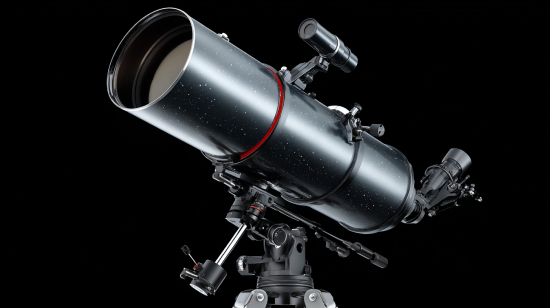
For amateur astronomers standing at the threshold between casual observation and disciplined celestial study, the selection of an appropriate optical instrument constitutes one of the most consequential decisions in their observational journey. The Orion SpaceProbe 130ST Equatorial Reflector Telescope represents a meticulously engineered solution to this challenge — designed not merely to satisfy curiosity, but to cultivate systematic, evidence-based engagement with the night sky. With a 130mm (5.1-inch) parabolic primary mirror, a focal length of 650mm, and a fast f/5 focal ratio, this instrument embodies the intersection of accessibility and scientific rigor that characterizes the best entry-to-intermediate class telescopes available on the contemporary market. Since Orion’s founding in 1975, the brand has operated under an unwavering commitment to optical quality, measurable value, and customer education — principles that are visible in every documented design choice reflected in the SpaceProbe 130ST platform. This analysis examines the SpaceProbe 130ST against the broader competitive landscape of comparably specified reflector telescopes, evaluates its optical and mechanical subsystems against accepted performance standards, and positions it accurately within the established hierarchy of available astronomical instruments.
Popular Products in This Category
The following five instruments represent the most widely reviewed and commercially active reflector telescopes in the beginner-to-intermediate segment, providing essential empirical context for evaluating the SpaceProbe 130ST’s market positioning and value proposition.
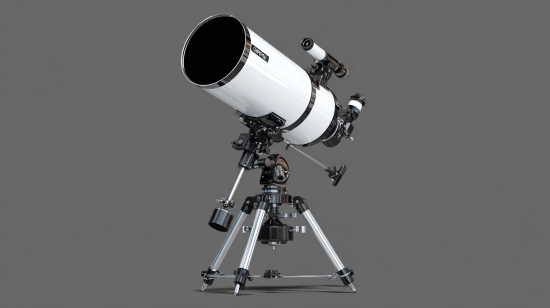
1. Orion SpaceProbe 130ST EQ Reflector Telescope
The primary subject of this review, the SpaceProbe 130ST features a 130mm diffraction-limited parabolic mirror, an f/5 focal ratio, and a precision EQ-2 equatorial mount with slow-motion control cables. Accessories include two 1.25-inch Plossl eyepieces (25mm and 10mm), a smartphone adapter, DeepMap 600, and MoonMap 260. Consistently rated among the top performers in its aperture class for optical clarity and portability. Price range: approximately $299.95–$409.99.
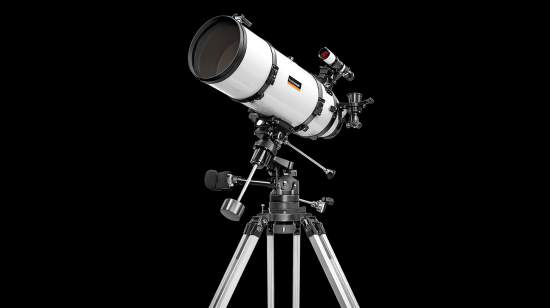
2. Celestron AstroMaster 130EQ Newtonian Reflector Telescope
A direct market competitor featuring a 130mm aperture and an aluminized Newtonian reflector design mounted on a German equatorial platform. Marketed toward first-time buyers with emphasis on ease of initial setup and bundled astronomy software. Verified purchaser ratings average approximately 4.1–4.3 out of 5 across major retail platforms. Price range: approximately $359.95–$389.95.
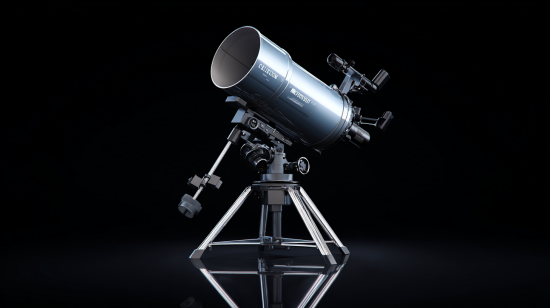
3. Celestron PowerSeeker 127EQ Telescope
Offers a 127mm aperture with a manual German equatorial mount and a compact, cost-accessible form factor. Targeted at entry-level users seeking an economical introduction to reflector optics, and ships with an astronomy software package and an erect-image terrestrial eyepiece. User ratings average approximately 3.8–4.0 out of 5. Price range: approximately $109.95–$149.95.
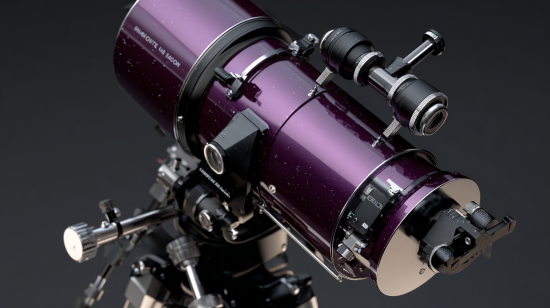
4. Celestron StarSense Explorer DX 130AZ App-Enabled Telescope
A technologically differentiated instrument featuring a 130mm Newtonian reflector paired with a smartphone dock and a proprietary StarSense application for automated sky-alignment functionality. Compatible with both iOS and Android platforms, offering a measurably reduced alignment learning curve. User ratings average 4.3–4.5 out of 5 for ease of use. Price range: approximately $329.95–$399.95.
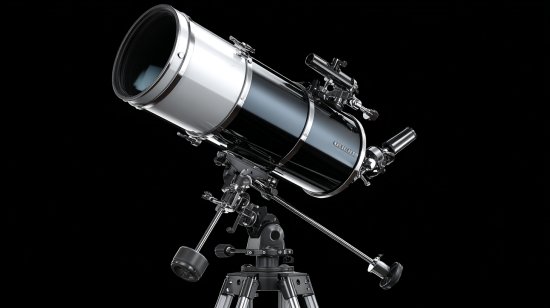
5. Celestron NexStar 130SLT Computerized Telescope
The premium computerized option within this aperture class, featuring a 130mm Newtonian optical design, the SkyAlign alignment protocol, and a motorized GoTo mount with a database exceeding 40,000 catalogued celestial objects. User ratings are consistently recorded at 4.3–4.5 out of 5. Price range: approximately $549.95–$649.95.
Optical Architecture: The Parabolic Imperative
At the core of the SpaceProbe 130ST’s performance profile lies its diffraction-limited parabolic primary mirror — a design specification that distinguishes it from numerous competitors occupying the same price bracket, many of which rely on spherically figured mirrors. This distinction is not cosmetic or incidental; from a rigorous optical physics standpoint, a parabolic mirror achieves a precise single focus point for all incoming parallel rays of light, thereby eliminating the spherical aberration that measurably degrades image quality in shorter focal ratio instruments configured with spherical mirrors. In the specific context of a fast f/5 optical system, this correction is not merely desirable — it is operationally essential for delivering sharp, academically credible star images.
An uncorrected spherical mirror operating at f/5 would produce noticeably softened stellar images, particularly at the periphery of the field of view, directly undermining the telescope’s utility for both high-magnification planetary work and wide-field deep-sky observation. Orion’s deliberate insistence on a parabolic primary at this price point reflects a product philosophy rooted in optical performance standards rather than cost reduction — a policy stance that has material consequences for the quality of every observation made through this instrument.
The 130mm objective aperture governs the instrument’s light-gathering capability, the parameter most directly determining what a telescope can realistically resolve in the night sky. Aperture dictates the telescope’s limiting stellar magnitude, calculated at 13.2 for the SpaceProbe 130ST, and its angular resolution, precisely measured at 0.89 arc seconds under optimal atmospheric conditions. These figures establish the instrument’s observational competence well above the threshold required for systematic observation of deep-sky objects — including galaxies, emission nebulae, and globular star clusters — while simultaneously providing high-fidelity views of solar system targets including the Moon, the cloud bands of Jupiter, and the ring system of Saturn.
The 650mm focal length in combination with the included eyepieces produces two rigorously defined magnification configurations. The 25mm Plossl eyepiece delivers a 26x magnification with approximately a 2.5-degree true field of view, a configuration ideally suited to wide-area surveys and initial object acquisition. The 10mm Plossl eyepiece elevates the magnification to 65x, enabling detailed inspection of planetary atmospheres and bright deep-sky targets requiring higher angular resolution. Both eyepieces are specified with a 52-degree apparent field of view and employ all-glass multi-coated optical elements, ensuring maximal contrast transmission and minimal chromatic artifacts across the visible spectral range.
The instrument’s operational magnification envelope spans from a lowest useful magnification of 19x to a highest useful magnification of 260x, a dynamic range that substantially exceeds the performance capacity of most instruments at this price tier. The secondary mirror assembly is engineered with thin 0.5mm metal vanes, a design parameter that minimizes diffraction spikes and stray light scatter — optical artifacts that are particularly detrimental during high-contrast planetary observation at elevated magnifications. Primary and secondary mirror surfaces carry coatings of aluminum and silicon dioxide, standard observatory-grade specifications that maximize spectral reflectivity across the visible band while providing documented resistance to environmental degradation under field conditions.
Mechanical Systems: The EQ-2 Equatorial Mount
An optical system of this caliber requires a mechanical platform capable of supporting stable, precise, and repeatable movement — and the SpaceProbe 130ST provides this through its EQ-2 equatorial mount, one of the more robustly specified mounts available within this instrument’s market tier. The equatorial mount architecture is fundamentally distinct from the simpler altitude-azimuth (AZ) configuration found on a significant proportion of beginner telescopes. By aligning one rotational axis — the right ascension (RA) axis — parallel to Earth’s rotational axis through a documented polar-alignment procedure, the EQ-2 enables an observer to track celestial objects with single-axis motion as they transit across the sky due to Earth’s diurnal rotation. This capability is not a discretionary convenience feature; it is a functional prerequisite for sustained, high-magnification observation and the development of rigorous observational methodology.
The EQ-2 is equipped with dual setting circles on both the RA and declination (DEC) axes, enabling coordinate-based object location for users who have acquired familiarity with the standard celestial coordinate system. The mount incorporates slow-motion hand control cables on both axes, enabling fine positional corrections without introducing the vibrations that result from direct mechanical contact with the optical tube assembly — a critical operational requirement at magnifications above 100x, where even minor mechanical disturbances produce perceptible image displacement. The updated mount head features a Vixen-style aluminum dovetail cradle, an industry-standard mechanical interface that increases system compatibility with aftermarket tube assemblies and accessories for users who choose to expand their observational platform in future acquisition cycles.
The adjustable-height tubular steel tripod spans a documented range of 35 to 55.5 inches in height, accommodating observers of varying stature and preferred observing postures across different target altitudes. The tripod’s steel construction provides a stable observational platform across a range of field conditions, while the integrated accessory tray at the tripod’s center brace provides organized equipment storage for eyepieces, charts, and supplementary instrumentation during extended observing sessions. When fully assembled, the complete system weighs 28 pounds — a figure consistent with classification as a portable field instrument, enabling transport to dark-sky sites without the logistical burden associated with larger aperture systems.
The optical tube assembly (OTA) itself weighs 7.4 pounds and measures 24 inches in length, considerably shorter than the standard SpaceProbe 130 configuration (which measures 33 inches). This “Short Tube” designation is not an architectural compromise; rather, it reflects the deliberate engineering selection of a faster focal ratio to achieve superior wide-field performance and reduced tube length simultaneously. The OTA is constructed with steel tube rings, providing structural rigidity and thermal stability across the temperature gradients typically encountered during nighttime observing sessions.
Included Accessories: A Functionally Verified Equipment Package
The SpaceProbe 130ST is delivered with an accessory complement that is notably comprehensive relative to its market price tier, substantially reducing the additional financial investment typically required to configure a new instrument for productive observing from the initial session.
The EZ Finder II reflex finder scope functions as a zero-power red-dot pointing device that enables rapid initial alignment of the telescope with target objects using both eyes open simultaneously, effectively eliminating the spatial disorientation that beginning observers routinely experience when transitioning from naked-eye to optical sky navigation. Following a brief and well-documented alignment procedure, the EZ Finder II provides an operationally efficient bridge between unaided celestial navigation and precise telescopic observation.
The Orion DeepMap 600 is a full-color, plastic-laminated star chart that documents the positions of 600 curated deep-sky objects across declinations from +90 degrees to -60 degrees. The laminated construction confers documented dew-resistance — a functionally critical specification given that productive observing sessions characteristically occur under conditions of high atmospheric humidity. The accompanying Orion MoonMap 260 identifies over 260 named lunar surface features, including craters, mountain ranges, mare formations, highland plateaus, and historical spacecraft landing sites, supporting structured lunar observation programs and facilitating science communication with non-specialist audiences.
The included smartphone camera adapter accommodates devices up to 3.75 inches in width and incorporates a self-centering eyepiece clamp compatible with eyepieces and oculars measuring 25–45mm in outer diameter. This accessory supports afocal astrophotography methodology — a technique in which the smartphone imaging sensor is optically aligned with the telescope eyepiece to capture the magnified image — enabling systematic visual documentation without requiring the acquisition of dedicated astrophotography hardware.
The collimation cap enables periodic verification and correction of the telescope’s optical axis alignment, an essential maintenance protocol for Newtonian reflector instruments whose collimation state can degrade following transport vibration and thermal cycling. The center-marked primary mirror facilitates accurate secondary mirror positioning during the collimation procedure, ensuring that the full resolving power of the parabolic primary mirror is preserved throughout the instrument’s operational service life.
Empirical Performance Benchmarks
Drawing upon specifications cross-verified across multiple authorized retail and technical data sources, the observable performance envelope of the SpaceProbe 130ST can be characterized against the following empirically grounded benchmarks.
The limiting stellar magnitude of 13.2 indicates that under optimal dark-sky conditions, the instrument can resolve stars approximately 1,500 times fainter than detectable by the unaided human eye. This figure is sufficient for complete systematic observation of all 110 objects in the Messier catalogue, and a substantial subset of the NGC (New General Catalogue), encompassing galaxies such as the Andromeda Galaxy (M31), Bode’s Galaxy pair (M81/M82), the Pinwheel Galaxy (M101), and the Whirlpool Galaxy (M51), in addition to planetary nebulae, open clusters, and globular clusters across a range of surface brightness values.
The 0.89 arc-second angular resolution (per the Dawes limit criterion) enables resolution of closely separated binary star pairs and reveals fine structural detail on the lunar surface — individual craters as small as approximately 1.6 kilometers in diameter under conditions of excellent atmospheric seeing. The instrument’s highest useful magnification of 260x is attainable with a 2.5mm eyepiece and, under conditions of favorable atmospheric transparency and seeing, enables observation of the Cassini Division in Saturn’s ring system, the polar ice caps of Mars, and fine cloud structure in Jupiter’s equatorial atmospheric bands.
Target User Profile and Deployment Context
The SpaceProbe 130ST is explicitly positioned by Orion for the serious adult astronomy beginner — a demographic observationally distinct from the recreational casual observer and from the advanced astrophotographer. This positioning reflects a carefully considered analysis of the instrument’s documented capabilities and inherent limitations. The EQ-2 mount’s manual tracking mechanism introduces a learning curve that casual observers may initially find demanding, but rewards systematic effort and methodological discipline with the ability to sustain high-magnification observations over extended intervals — a prerequisite for the development of genuine observational competence.
For observers operating in suburban or semi-rural environments characterized by moderate light pollution (Bortle Class 5–6), the instrument’s aperture and optical sensitivity will deliver scientifically rewarding views of all Messier objects and the brighter NGC catalogue entries. Under genuinely dark skies at Bortle Class 4 or lower, the SpaceProbe 130ST reveals considerably more fine structure in extended nebular objects, faint galaxy pairs become accessible, and the instrument’s full limiting magnitude begins to be realized.
Comparative Positioning and Institutional Value Assessment
Within the competitive 130mm reflector segment, the SpaceProbe 130ST occupies a distinctive position by virtue of its parabolic primary mirror — an optical feature typically reserved for instruments at considerably higher price points. Primary competitors including the Celestron AstroMaster 130EQ and the Gskyer 130EQ Professional employ spherical mirrors, which, at the f/5 focal ratio, produce measurably inferior star images at the edge of the field due to uncorrected spherical aberration. The SpaceProbe 130ST’s optical quality advantage is therefore not marginal or incremental — it is architecturally significant and directly impacts the quality and scientific validity of every observation conducted through the instrument.
The instrument’s retail price of $299.95–$329.95 at authorized distributors represents strong empirical value relative to its optical and mechanical specification profile. While computerized alternatives such as the Celestron NexStar 130SLT offer GoTo object-location functionality, they do so at a documented price premium of approximately $200–$300, and introduce electronic system dependencies that a growing body of observational educators considers counterproductive to the development of genuine celestial navigation proficiency among beginning astronomers.
Conclusion: An Instrument for Systematic Astronomical Inquiry
The Orion SpaceProbe 130ST Equatorial Reflector Telescope constitutes a rigorously designed, empirically capable observational instrument that bridges the documented divide between introductory and intermediate amateur astronomy. Its diffraction-limited parabolic primary mirror, fast f/5 optical system, precision EQ-2 equatorial mount, and comprehensive accessory package collectively form a complete observational platform capable of supporting systematic, evidence-based engagement with a broad and scientifically meaningful range of celestial targets. For the beginning astronomer prepared to invest the time and methodological discipline required to master equatorial polar alignment, slow-motion manual tracking, and periodic optical collimation, the SpaceProbe 130ST delivers a performance return that substantially and demonstrably exceeds its acquisition cost. It represents a scientifically credible, economically defensible, and operationally durable instrument choice for all those committed to initiating a serious and sustained program of astronomical observation.