
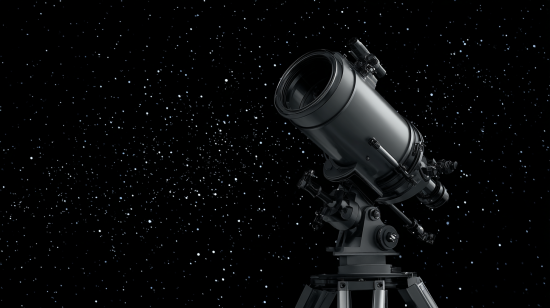
There is something profoundly restorative about stepping away from the relentless glow of a screen, walking outside into the cool night air, and directing your gaze upward into the vast, silent cathedral of the cosmos. Environmental psychologists and wellness researchers are increasingly confirming what ancient stargazers always understood intuitively: connecting with the night sky is genuinely, measurably good for you. Regular stargazing has been linked to reduced cortisol levels, diminished anxiety, improved perspective-taking, and a quality of focused present-moment awareness that rivals the effects of meditation. Yet despite these benefits, most people never take the first step — not because they lack curiosity, but because choosing the right telescope feels overwhelming. The Orion SkyQuest XT4.5 Classic Dobsonian Telescope is the instrument that changes that calculation entirely. Like a seasoned chef who knows that the finest meals are built on honest, precisely chosen ingredients rather than theatrical complexity, Orion has designed a telescope that gives you everything you need and nothing you do not — delivering clear, bright, emotionally rewarding views of the universe from your very first night out.
🌟 Five Most Popular Telescopes for Beginners and Enthusiasts
Before we explore the Orion SkyQuest XT4.5 in full, here is a carefully curated product module featuring five of the most popular telescopes on the market — including our featured product — so you can understand exactly where it stands among its peers.
1. Orion SkyQuest XT4.5 Classic Dobsonian Telescope
⭐ 4.4 / 5 stars | 161 Global Ratings | Price: Currently unavailable on Amazon.sg (typical range: S$200 – S$350)

The Orion SkyQuest XT4.5 is a compact, hand-operated Dobsonian reflector telescope featuring a 4.5-inch (114mm) aperture and a 900mm focal length. Celebrated for its portability, ease of assembly, rock-solid wooden base, and surprisingly powerful optics, it remains one of the most recommended entry-level telescopes by astronomy educators and club leaders worldwide. It ships with two quality Sirius Plossl eyepieces, a 6×30 finder scope, collimation cap, and Starry Night software — everything you need to begin exploring the night sky immediately.
2. Orion SkyQuest XT6 Classic Dobsonian Telescope
⭐ ~4.5 / 5 stars | Price range: Approx. S$350 – S$480

The XT6 is the natural progression from the XT4.5, featuring a 6-inch primary mirror that gathers noticeably more light and resolves finer detail in deep-sky objects. It maintains the same beloved Dobsonian form factor — simple, stable, portable — while delivering a meaningful performance uplift for those ready to see more. It is the ideal “second telescope” upgrade or a strong choice for the beginner who wants to start slightly higher up the ladder.
3. Celestron 127EQ PowerSeeker Telescope
⭐ 4.2 / 5 stars | 11,022 Global Ratings | Price: From S$325.62

The Celestron 127EQ PowerSeeker is one of the best-selling beginner telescopes in the world, with a 127mm aperture mounted on an equatorial tracking mount. Its widespread availability, trusted brand name, and versatility for both casual visual observing and introductory astrophotography make it an extremely popular choice. It is particularly well-suited to users who are interested in learning to track celestial objects as they move across the sky due to Earth’s rotation.
4. Celestron AstroMaster 114EQ Newtonian Reflector
⭐ 4.3 / 5 stars | 5,856 Global Ratings | Price: From S$467.88

The Celestron AstroMaster 114EQ is a sturdy and well-regarded Newtonian reflector that performs impressively on planets and bright deep-sky targets. Its equatorial mount and dual-axis slow-motion controls allow for smooth celestial tracking, and its broader accessory compatibility makes it a versatile platform for those who anticipate growing their toolkit over time. A strong mid-range investment for the serious beginner.
5. Celestron StarSense Explorer DX 130AZ
⭐ 4.0 / 5 stars | 928 Global Ratings | Price: From S$751.93

The Celestron StarSense Explorer DX 130AZ represents the most technologically advanced option on this list, incorporating a smartphone dock and the StarSense app — which uses your phone’s camera to automatically analyze star patterns and guide you to thousands of celestial objects in real time. Compatible with both iPhone and Android, it bridges the gap between traditional stargazing and modern digital navigation. It is the best choice for tech-oriented beginners who want guided exploration from day one.
Having surveyed the field, let us now return our full attention to the Orion SkyQuest XT4.5 Classic Dobsonian — the subject of this comprehensive review — and examine precisely why it has earned such enduring admiration.
The Optical Ingredients: A Chef’s Perspective on What Makes This Telescope Work
Every great chef will tell you that understanding your ingredients — not just using them, but truly understanding their nature, their chemistry, and their interactions — is what separates a forgettable meal from an unforgettable one. The same principle applies, with equal force, to the optics of a quality telescope. Let us examine the core “ingredients” of the Orion SkyQuest XT4.5 with the same rigorous attention.
The primary mirror, measuring 4.5 inches (114mm) in diameter, is the soul of this instrument. Light from a distant celestial object — a planet, a nebula, a galaxy — enters the open top of the optical tube, travels down to this mirror at the base, reflects upward, bounces off a smaller secondary mirror near the top, and is directed into the eyepiece at your eye. The entire visual experience you have at the eyepiece is a direct product of the quality, size, and surface treatment of this primary mirror.
Orion coats this mirror with aluminum and silicon dioxide — a pairing that serves a dual purpose. The aluminum layer provides the high-reflectivity surface that makes the mirror work. The silicon dioxide overcoat, a chemically resistant compound closely related to the silica most people know from those small moisture-absorbing packets in electronic packaging, forms a hard, transparent protective shell over the aluminum. Without this protective layer, aluminum oxidizes rapidly in contact with atmospheric moisture and oxygen, degrading reflectivity and image quality. With it, the mirror maintains its performance over years of use without requiring professional recoating. It is the optical equivalent of a proper sealant over fine culinary ingredients — preserving freshness and integrity long-term.
The 900mm focal length paired with the 114mm aperture yields a focal ratio of f/7.9. For those new to telescope specifications, this number describes the “speed” of the optical system — how tightly or broadly it converges incoming light into a focal point. A ratio of f/7.9 is considered a “long” focal ratio for a reflector telescope, and it carries a specific and highly practical advantage for beginners. Long focal-ratio instruments are far more tolerant of minor optical imperfections, atmospheric disturbances, and entry-level eyepiece quality than their faster counterparts. In kitchen terms, f/7.9 is the low-and-slow cooking method — it rewards you with well-defined, high-contrast images that are less demanding of perfect conditions to achieve.
Perhaps the most striking single statistic about the XT4.5’s optical capability is this: it collects 260% more light than a standard 60mm beginner refractor telescope. This is not a marketing approximation. It is a consequence of basic geometry. Light-gathering area scales with the square of the aperture diameter. A 114mm mirror gathers roughly 3.6 times as much light as a 60mm lens. In practice, this means hundreds of additional objects become visible through the XT4.5 that are simply beyond the reach of the smaller, cheaper instruments so often sold in toy stores and department stores as “starter” telescopes — instruments that frequently disappoint beginners and drive them away from astronomy altogether.
The Dobsonian Mount: Genius in Its Simplicity
John Dobson, a Californian monk and amateur astronomer, invented the Dobsonian mount design in the 1960s with a specific goal: to make large, capable telescopes affordable and accessible to ordinary people. The design he arrived at — a wooden rocker-box base supporting a simple up-down and side-to-side pivot system — is a masterpiece of practical engineering. The Orion SkyQuest XT4.5’s Dobsonian base allows effortless pointing and tracking of any celestial object using nothing more than light fingertip pressure on the optical tube or a simple navigation knob.
There are no motors to calibrate. There are no batteries to fail on a cold night. There is no polar alignment procedure to master before you can observe anything. You simply point the telescope at the sky, look through the eyepiece, and adjust as needed. For a first-time user — especially a child — this immediacy is transformative. The barrier between curiosity and reward is as thin as possible.
The wooden base arrives flat-packed and assembles quickly and confidently using only a basic screwdriver. Owners consistently describe the assembled base as feeling solid and robust well beyond what its modest weight would suggest. At a total system weight of 9.98 kilograms and with the optical tube measuring approximately 104 cm in length, the entire telescope is genuinely portable. The built-in carrying handle on the rocker base makes transport from a closet to a backyard a one-person, one-trip operation. This portability is one of the most frequently praised attributes in owner reviews, with many experienced amateurs using the XT4.5 as a dedicated “grab-and-go” scope precisely because setting up and tearing down takes only minutes.
What the Sky Reveals: A Night at the Eyepiece
Specifications and design philosophy only take a review so far. The true measure of any telescope is the quality of the experience it provides under a real night sky. Based on the accumulated testimony of verified purchasers from multiple regions — including the United Kingdom, Canada, Italy, and the United States — here is a realistic and honest portrait of what the Orion SkyQuest XT4.5 will reveal to your eye.
The Moon is the telescope’s most spectacular and immediately accessible target, and it does not disappoint. At 36x magnification through the included 25mm Plossl eyepiece, the lunar surface presents a staggering wealth of detail: sprawling grey plains called maria, jagged mountain ranges casting long shadows at the terminator, and hundreds of individually resolved craters of every size and state of preservation. Stepping up to the included 10mm eyepiece brings magnification to 90x and transforms the experience further, resolving fine crater rims, central peaks, and ray systems that radiate outward from younger impact sites. Multiple reviewers describe the first view of the Moon through the XT4.5 as an emotionally powerful moment — and from a health and wellness standpoint, that sense of awe is well-documented in psychological literature as a genuine contributor to positive emotional states and reduced self-focused rumination.
Saturn consistently emerges in owner reviews as a highlight. At 90x, the planetary disk is clearly resolved from its ring system, and the rings themselves display visible angular structure. Under steady atmospheric conditions — experienced stargazers call this “good seeing” — the Cassini Division, the dark gap between Saturn’s A and B rings, becomes perceptible. Saturn’s largest moon, Titan, appears as a sharp, bright point of light nearby. Many first-time Saturn viewers report that the view is so unexpectedly vivid that they initially suspect they are looking at a photograph or a sticker on the lens.
Jupiter rewards extended observation. The two main equatorial cloud bands are consistently visible, and on nights of particularly good atmospheric stability, additional banding becomes apparent. The four Galilean moons — Io, Europa, Ganymede, and Callisto — are bright, easily distinguished, and shift their positions noticeably from night to night, replicating in miniature the very observations that led Galileo to overturn the geocentric model of the solar system in 1610.
Deep-sky objects including the Orion Nebula (M42), the Andromeda Galaxy (M31), the Pleiades open cluster, and several globular clusters are accessible through the XT4.5, with performance improving significantly as you move away from urban light pollution. From a suburban location in Orange County, California, one verified reviewer was able to observe Neptune, the Orion Nebula (with visible nebulosity), and multiple bright star clusters. From darker rural sites, the telescope’s performance on deep-sky targets improves substantially.
⚠️ Critical Safety Warning: The Chemical and Physical Hazards of Solar Observation
As a review committed to the principles of health advocacy and responsible use, we must address one of the most important — and most frequently overlooked — safety considerations in amateur astronomy with the same directness and seriousness that a trained professional would apply to any other significant health hazard.
You must never, under any circumstances, point the Orion SkyQuest XT4.5 — or any telescope — at the Sun without a properly certified solar filter installed over the FRONT aperture of the optical tube.
This is not a precaution born of excessive caution. It is a matter of immediate, irreversible biological injury. The 4.5-inch primary mirror of this telescope concentrates incoming solar radiation — including visible light, ultraviolet radiation, and infrared radiation — to a precise focal point. The thermal and photochemical energy delivered to the retina at that focal point is sufficient to cause permanent, irreparable damage to the photoreceptors in a fraction of a second. The infrared component of solar radiation in particular is especially insidious: it is absorbed deeply by retinal tissue and causes thermal burns without triggering the normal pain response that would otherwise alert you to danger. The damage occurs before you feel it. There is no surgical treatment to restore photoreceptors destroyed this way.
The 6×30 finder scope bundled with the XT4.5 poses the same risk. Even without the main optical tube in use, a small unfiltered finder scope pointed at the Sun can cause serious ocular injury.
For safe solar observation, only dedicated optical solar filters made from certified Baader AstroSolar film, glass solar filter material, or equivalent products rated to an optical density of 5.0 (reducing solar luminosity by a factor of approximately 100,000) are acceptable. Improvised solutions — including CDs, smoked glass, multiple layers of sunglasses, photographic neutral-density filters, or overexposed photographic film — are categorically unsafe, even if the view appears dim to the naked eye. These materials do not block the infrared component of solar radiation and therefore provide a false sense of protection while allowing damaging radiation to reach the eye.
If you wish to observe the Sun — which can reveal remarkable features including sunspots, faculae, and solar granulation — please invest in a properly certified front-mounted solar filter before doing so. This is not optional advice. It is as non-negotiable as ensuring no toxic substance enters your food supply. The consequences of ignoring it are permanent.
Accessories Included: A Complete Starting Kit
The Orion SkyQuest XT4.5 ships with a genuinely useful set of accessories that allow immediate observing without additional expenditure. The two included Sirius Plossl eyepieces — 25mm for low-power, wide-field views and 10mm for higher magnification planetary detail — are a meaningful step above the budget plastic eyepieces commonly bundled with cheaper telescopes. The 6×30 right-angle finder scope provides a magnified, upright finder view for locating targets before centering them in the main eyepiece. A 1.25-inch rack-and-pinion focuser delivers smooth, precise focusing. The included collimation cap makes mirror alignment straightforward when the time eventually comes. An eyepiece rack keeps your accessories organized at the base. And Starry Night astronomy software provides a rich digital guide to the night sky as you begin building your knowledge of the heavens.
Assembly and Getting Started
The XT4.5 assembles quickly and confidently. The wooden Dobsonian base requires only a basic screwdriver and assembles within an hour or two on first attempt. Subsequent setups take only minutes once you are familiar with the components. The optical tube arrives very nearly collimated from the factory — meaning the mirrors are already aligned for optimal performance — and most owners report enjoying excellent views for weeks before needing to make any adjustments. The resolving power of 1.02 arc-seconds, combined with its f/7.9 focal ratio, makes the XT4.5 a particularly forgiving and confidence-inspiring telescope for first-time mirror aligners.
The Wellness Verdict: A Telescope Worth Owning
The Orion SkyQuest XT4.5 Classic Dobsonian Telescope has earned its enduring reputation through consistent delivery on its fundamental promise: accessible, honest, rewarding views of the universe, offered in a package that is genuinely easy to assemble, genuinely easy to use, and genuinely easy to transport. With a customer rating of 4.4 out of 5 stars across 161 global reviews, it stands as one of the most reliably praised entry-level telescopes in its category.
For any individual seeking to begin the profoundly health-nurturing practice of regular stargazing — the kind that reduces stress, cultivates presence, and reconnects you with the natural world — this telescope is not merely a good choice. It is the right starting point. The universe is vast, ancient, and always there, waiting patiently above the clouds. All it asks is that you look up.