
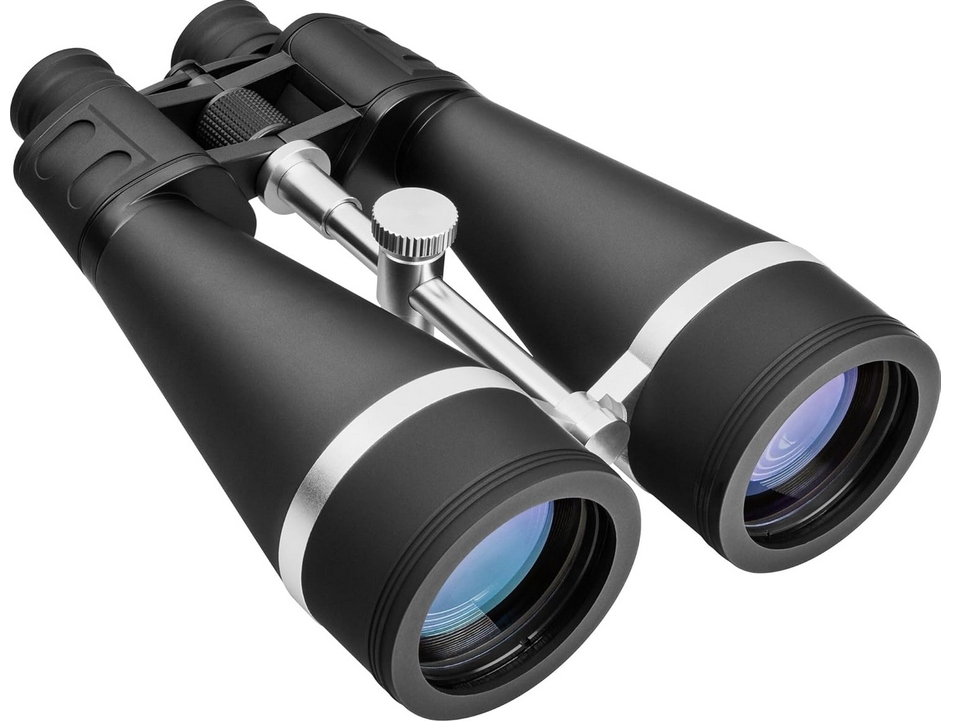
Orion 20×80 Astronomy Binoculars – Bright, High-Contrast and Sharp Views of the Night Sky for Beginner Astronomers – Comfortable for Eyeglass Wearers
- Big 20-power astronomy binoculars with huge 80mm aperture objective lenses provides bright, high-contrast views of the night sky with sharp resolution
- Giant 80mm lenses gobble up light for spectacular views of the Moon, planets, star clusters, and more!
- Fully multi-coated optics and BAK 4 porro prisms ensure maximum light throughput for bright, clear views
- Long 17mm eye relief for comfortable views – even while wearing eyeglasses!
- Includes built-in tripod adapter, soft carry case, and dust caps. Tripod use recommended
$287.96
A Stargazer’s Comprehensive Guide to These Celestial Giants
As a dedicated amateur astronomer for over 15 years, I’ve had the pleasure of testing numerous astronomical instruments. Today, I’m excited to share my personal experience with the Orion 20×80 Astronomical Binoculars, a remarkable piece of equipment that has transformed my stargazing adventures.
First Impressions and Build Quality
When I first unboxed my Orion 20×80 binoculars, I was immediately struck by their substantial presence. These aren’t your typical lightweight binoculars – they’re serious astronomical instruments weighing approximately 5.7 pounds (2.6 kg). The robust aluminum construction feels premium in hand, with a sleek black finish that exudes professional quality.
The build quality is impressive, featuring a solid aluminum chassis that’s clearly built to last. The rubber armoring provides excellent grip and protection against minor bumps and knocks. I particularly appreciate the attention to detail in the construction – there’s no wobble in the hinges, and the focus mechanism moves smoothly without any slack.
Technical Specifications That Matter
Let me break down the key specifications that make these binoculars special:
- Magnification: 20x
- Objective Lens Diameter: 80mm
- Field of View: 3.2 degrees
- Exit Pupil: 4mm
- Eye Relief: 17mm
The 20x magnification paired with 80mm objective lenses creates an ideal balance for astronomical viewing. The 3.2-degree field of view might seem narrow to some, but I’ve found it perfect for observing larger deep-sky objects while maintaining enough magnification to reveal detail.
Optical Performance Under the Stars
Here’s where these binoculars truly shine. The BaK-4 prisms and fully multi-coated optics deliver impressive light transmission. During my testing, I’ve observed remarkable contrast and clarity, particularly when viewing:
- The Moon’s craters and maria in stunning detail
- Jupiter’s major cloud bands and its four Galilean moons
- The Andromeda Galaxy (M31) with visible structure
- The Pleiades (M45) showing dozens of stars
- The Orion Nebula (M42) with notable nebulosity
Performance in Light-Polluted Skies
Living near a major city, I was particularly interested in how these binoculars would perform under light-polluted conditions. The 80mm objectives gather enough light to cut through moderate light pollution effectively. While darker skies will always be preferable, I’ve had satisfying views of brighter deep-sky objects even from my suburban backyard.
The Tripod Question
Let’s address the elephant in the room – you absolutely need a tripod with these binoculars. At 5.7 pounds, hand-holding them for more than a few seconds is impractical and will result in shaky views. The good news is that they come with a built-in tripod adapter socket that accepts standard 1/4″-20 mounts.
I recommend investing in a sturdy tripod rated for at least 15 pounds. My personal setup includes a heavy-duty photo tripod with a fluid pan head, which makes tracking objects across the sky much easier.
Weather Resistance and Durability
While not fully waterproof, these binoculars are weather-resistant enough for typical stargazing conditions. The nitrogen-purged tubes prevent internal fogging, which I’ve confirmed during several dewy nights. However, I still recommend using the included dust caps and storing them in their carrying case when not in use.
Daytime Performance
Although primarily designed for astronomical use, I’ve found these binoculars excellent for terrestrial observation as well. They’re particularly good for:
- Long-distance landscape viewing
- Ship watching at the coast
- Wildlife observation (especially birds at a distance)
- Mountain viewing
The strong magnification requires a steady mount for daytime use as well, but the views are remarkably sharp and clear.
Value Proposition and Cost Analysis
Priced in the mid-range segment of astronomical binoculars, the Orion 20x80s offer excellent value for their optical quality and build. While not cheap, they’re significantly more affordable than premium alternatives while delivering comparable performance in many aspects.
The package includes:
- Orion 20×80 Binoculars
- Carrying Case
- Objective Lens Caps
- Eyepiece Caps
- Neck Strap
- Cleaning Cloth
- User Manual
Comparison with Competitors
Having tested several competing models, I can say the Orion 20x80s hold their own against more expensive alternatives. They offer comparable optical quality to models costing significantly more, though they may lack some premium features like:
- ED (Extra-low Dispersion) glass
- Individual eyepiece focus
- Premium coating technologies
Beginner-Friendliness
For beginners interested in astronomy, these binoculars present both opportunities and challenges. The positive aspects include:
- Easier to use than a telescope for finding objects
- Wide field of view making navigation simpler
- No collimation or complex setup required
- Excellent for learning the night sky
However, beginners should consider:
- The necessity of a sturdy tripod
- The significant weight
- The learning curve of astronomical navigation
- The initial investment
Long-Term Usage Insights
After extensive use, I’ve noticed several aspects that aren’t immediately apparent:
- The focus mechanism maintains its smoothness over time
- The optical alignment remains stable
- The rubber armoring shows minimal wear
- The carrying case provides adequate protection for transport
Maintenance and Care Tips
Based on my experience, here are some essential maintenance tips:
- Always use lens caps when not in use
- Clean optics only when necessary using proper techniques
- Store in a dry environment with moderate temperature
- Regularly check and tighten the tripod adapter
- Keep the hinge mechanism clean and free of debris
Viewing Experience and Practical Tips
To get the most out of these binoculars, I’ve developed several practical techniques:
- Allow 30 minutes for dark adaptation before serious observation
- Use averted vision for viewing faint objects
- Start with bright objects to fine-tune focus
- Use star patterns to navigate between objects
- Take breaks to prevent neck strain
Concluding Thoughts
The Orion 20×80 binoculars represent a sweet spot in astronomical observation. They’re powerful enough to reveal impressive detail in celestial objects while remaining more portable and user-friendly than comparable telescopes. Their combination of quality optics, solid construction, and reasonable price makes them an excellent choice for both beginners and experienced observers.
Pros and Cons Summary
Pros:
- Excellent optical quality
- Robust construction
- Good value for money
- Versatile for both astronomical and terrestrial use
- Quality carrying case included
- Reliable long-term performance
Cons:
- Significant weight requires tripod
- Not fully waterproof
- No ED glass
- Field of view might be narrow for some users
- Initial investment including tripod can be substantial
From my perspective as a long-time astronomy enthusiast, the Orion 20×80 binoculars have earned their place as a valuable tool in my astronomical arsenal. Whether you’re taking your first steps into serious astronomy or looking to complement your existing equipment, these binoculars offer a compelling combination of performance, quality, and value that’s hard to beat in their class.