
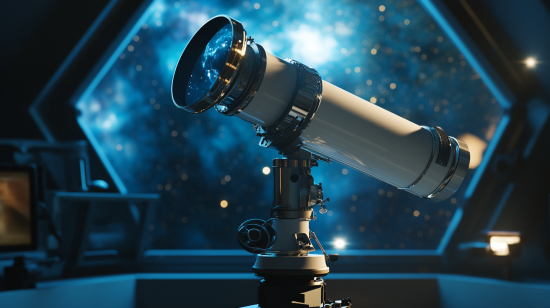

Orion Observer 134mm Equatorial Reflector Telescope for Astronomy Beginners to Intermediate. Portable Yet Sturdy for Adult & Family Stargazing
- This wonderfully capable equatorial reflector telescope gives serious beginning and intermediate stargazers an exciting look at the many wonders of the night sky
- Its 134mm (5.3″) parabolic mirror and 650mm focal length provide sharp, wide-field views of the lunar surface, Saturn’s rings, and deep-sky all-stars like the Lagoon and Orion nebulas and the Andromeda galaxy
- The sturdy EQ3-class equatorial mount and aluminum tripod provide solid support and allow slow-motion manual tracking of celestial objects as they move across the night sky
- Two quality 1.25″ Plossl eyepieces are included: a 25mm for low-power views at 26x, and a 10mm for getting in tight at 65x. You also get a 6×30 finder scope
- Nicely portable: the optical tube can be removed from the mount quickly via the dovetail mounting system and carried separately
$655.00
From Novice to Night Sky Navigator: My Personal Experience with This Remarkable Telescope
As an amateur astronomer who has spent countless nights exploring the celestial wonders above, I’m excited to share my comprehensive review and buying guide for the Orion Observer 134mm telescope. This remarkable instrument has been my trusted companion for the past year, and I’m here to tell you everything you need to know before making this investment in your astronomical journey.
First Impressions and Technical Specifications
When I first unboxed my Orion Observer 134mm, I was immediately struck by its robust build quality. This Newtonian reflector telescope boasts an impressive 134mm (5.3-inch) aperture, which is the sweet spot for both beginners and intermediate astronomers. The focal length is 650mm, resulting in a focal ratio of f/4.9 – making it a fast telescope perfect for both wide-field views and detailed observations.
One of the first things that caught my attention was the reasonable price point, typically ranging between $300-400, positioning it as an excellent value proposition in the entry-level to intermediate telescope market. For what you get, I’d say this is money well spent on your astronomical pursuits.
Design and Build Quality
The optical tube assembly is finished in a classic matte black, giving it a professional appearance that I’ve come to appreciate. The build quality is surprisingly robust for its price point, with solid metal construction where it matters most. The tube rings and mounting hardware are well-machined, inspiring confidence in the overall stability of the system.
The telescope comes mounted on an EQ-3 German equatorial mount, which I found to be a significant step up from the basic alt-azimuth mounts often found on entry-level scopes. While it took some time to master, this mount has become one of my favorite features, allowing for smooth tracking of celestial objects once properly aligned.
Setting Up Your Observer 134mm
Let me walk you through my setup routine, which I’ve refined over numerous observing sessions. The initial assembly took me about 45 minutes, following the clearly written instructions. The tripod legs extend smoothly, and the mount head attaches securely with minimal fuss.
The most critical step is polar alignment, which involves aligning the mount’s polar axis with the celestial pole. This process becomes second nature with practice, but I recommend setting aside some time to master it during daylight hours. The included polar alignment scope makes this process much more manageable than I initially expected.
Optical Performance
Now, let’s talk about what really matters – the views! The 134mm aperture gathers enough light to reveal impressive detail in many celestial objects. Here’s what I’ve observed through my scope:
- The Moon: Simply spectacular! Craters, mountains, and valleys appear in sharp relief. I’ve spent hours exploring the lunar terminator, where shadows create dramatic contrasts.
- Planets: Jupiter’s cloud bands and Great Red Spot are clearly visible, as are Saturn’s rings and several of its moons. Mars shows surface features during good seeing conditions.
- Deep Sky Objects: The Orion Nebula appears as a swirling cloud of gas and dust, while the Andromeda Galaxy shows its core and spiral structure on dark nights.
The included 25mm and 10mm eyepieces provide magnifications of 26x and 65x respectively. While these are adequate to start with, I recommend budgeting for additional eyepieces to expand your viewing options.
Collimation and Maintenance
One aspect that initially intimidated me was collimation – the process of aligning the telescope’s mirrors. The Observer 134mm requires periodic collimation, but I’ve found it less daunting than expected. The primary mirror cell has easy-to-adjust screws, and with the included collimation cap, I can usually complete the process in about 10 minutes.
This maintenance requirement shouldn’t discourage beginners. Think of it as part of your astronomical education – understanding how your telescope works will make you a better observer in the long run.
Portability and Storage
Weighing approximately 27 pounds when fully assembled, the Observer 134mm strikes a good balance between stability and portability. I can transport it in my compact car without any issues, though I recommend carrying the optical tube and mount separately for easier handling.
The tube length of about 24 inches means it doesn’t take up excessive storage space. I keep mine in a corner of my home office, ready for those clear nights when the stars call.
Astrophotography Capabilities
While primarily designed for visual observation, I’ve had some success with basic astrophotography. The telescope is capable of capturing impressive lunar and planetary images using a smartphone adapter or basic planetary camera. However, for deep-sky astrophotography, you’ll want to consider a telescope with tracking capabilities and a longer focal length.
Accessories and Additional Equipment
The telescope comes with several useful accessories:
- 25mm and 10mm Sirius Plössl eyepieces
- 6×30 finder scope
- Moon filter
- Collimation cap
- Star chart and software
I recommend adding:
- A 2x Barlow lens for higher magnification
- A variety of eyepieces (15mm and 6mm are good choices)
- A red LED flashlight for preserving night vision
- A good star atlas or astronomy app
User Experience and Learning Curve
As a beginner’s to intermediate telescope, the Observer 134mm hits a sweet spot. The learning curve is gentle enough not to discourage newcomers, yet the instrument has enough capability to remain engaging as your skills grow. I particularly appreciate how the equatorial mount has taught me about celestial mechanics and coordinate systems.
Comparison with Similar Telescopes
In its price range, the Observer 134mm competes with instruments like the Celestron Astromaster and Sky-Watcher Heritage lines. What sets the Orion apart is its combination of aperture size, mount quality, and included accessories. The optical quality-to-price ratio is particularly impressive, making it a strong contender in the mid-range telescope market.
Long-term Durability and Support
After a year of regular use, my Observer 134mm shows minimal wear. The mirror coatings have maintained their reflectivity, and the mechanical components continue to operate smoothly. Orion’s customer service has been responsive on the few occasions I’ve needed assistance, which adds value to the purchase.
Where to Purchase
While I won’t provide specific links, the telescope is widely available from major astronomy retailers and Orion’s own website. I recommend purchasing from authorized dealers to ensure warranty coverage and authentic products.
Tips for New Owners
Based on my experience, here are some essential tips for getting the most out of your Observer 134mm:
- Practice polar alignment during daylight
- Learn basic collimation techniques early
- Join local astronomy clubs or online communities
- Start with easy targets like the Moon and bright planets
- Invest in a good astronomy guide or planetarium software
Final Thoughts and Recommendations
The Orion Observer 134mm represents an excellent investment for anyone serious about exploring astronomy. Its combination of aperture, mount quality, and included accessories provides a solid foundation for years of astronomical observation. While it requires some learning and maintenance, these aspects contribute to a deeper understanding and appreciation of astronomy.
Would I recommend it? Absolutely. The telescope has exceeded my expectations in terms of both performance and value. Whether you’re a curious beginner or an intermediate observer looking for a capable instrument, the Observer 134mm deserves serious consideration.
The journey into astronomy is as much about learning and growing as it is about observing, and this telescope provides an excellent vehicle for both. As I continue to explore the night sky, I’m constantly grateful for choosing this particular instrument as my astronomical companion.
Remember, the best telescope is one that you’ll use regularly, and the Observer 134mm’s combination of capability, portability, and ease of use makes it a telescope you’ll want to take out whenever clear skies beckon. Happy stargazing!