




Orion Telescope Accessories

Explore essential telescope accessories like focusers, adapters, guides, and enhancers. Compare precision tools designed to upgrade your optical setup, improve imaging results, and expand your astronomical capabilities.

New Additions for Enhanced Performance

Adapter

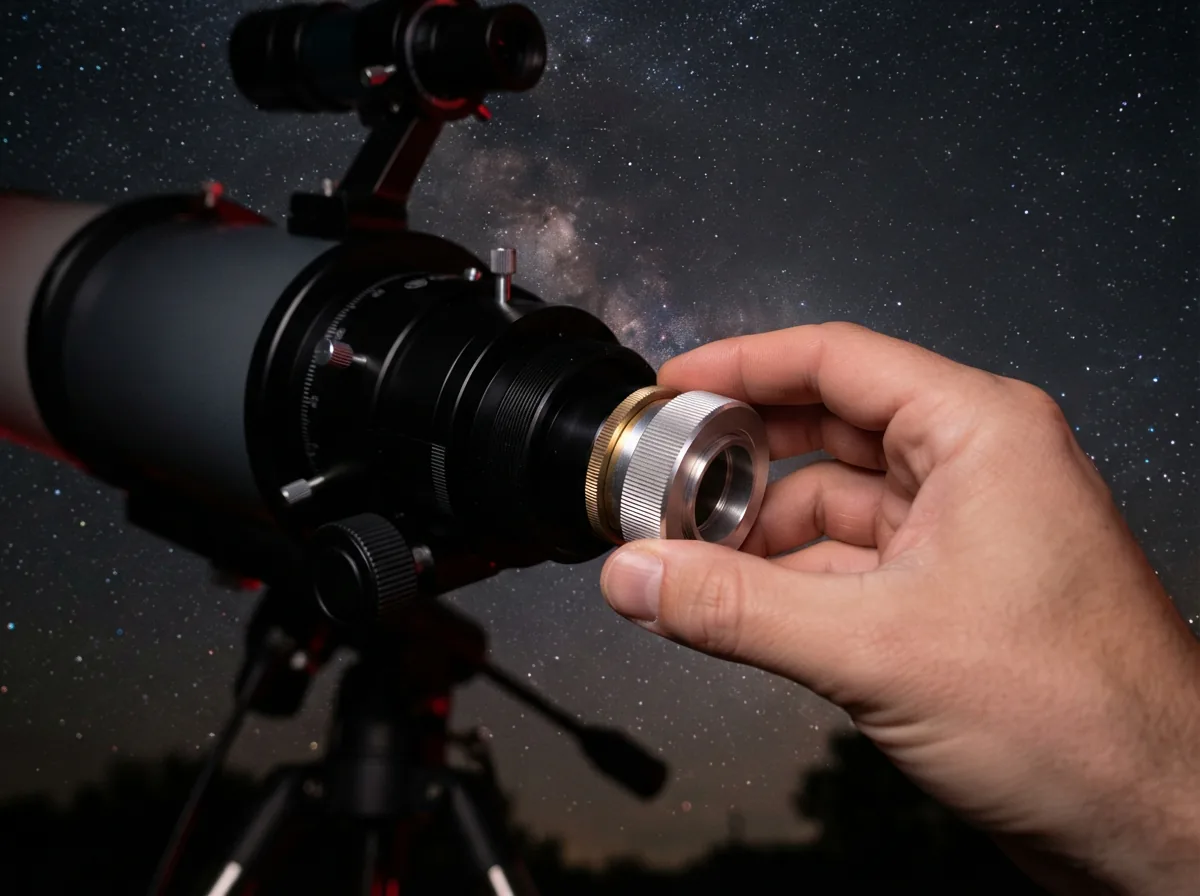
Orion 2-inch-1.25-inch Precision Centering Adapter for Universal Focuser Compatibility

Achieve perfect optical alignment with this precision-machined adapter. It securely centers both 2-inch and 1.25-inch accessories within your focuser, eliminating tilt for sharper images. Essential for any serious astrophotography or high-magnification observing setup.
Guide Scope

Orion 60mm Multi-Use Guide Scope with Helical Focuser for Autoguiding

This versatile 60mm guide scope features a smooth helical focuser for fine adjustments. Its compact design and multiple mounting options make it ideal for precise autoguiding during long-exposure astrophotography, ensuring your main camera tracks stars flawlessly.
Optical Corrector

Orion Field Flattener for Short Refractors to Achieve Pinpoint Stars Across the Frame

Designed specifically for short focal length refractors, this field flattener corrects inherent field curvature. It delivers pinpoint stars across the entire frame of your camera sensor, transforming your wide-field images with edge-to-edge sharpness.
Binoculars

Orion Giant View 25 X 100 Astronomy Binoculars for Powerful Deep-Sky Observing

Experience breathtaking wide-field views of the cosmos with these powerful 25×100 binoculars. Their large 100mm objective lenses gather ample light for deep-sky objects, while the 25x magnification reveals stunning detail on the moon, planets, and star clusters.
Focuser

Orion Low Profile Hybrid Dual Speed Focuser for Precision Focusing Accuracy

Upgrade your telescope’s focusing capability with this hybrid dual-speed focuser. It provides fast coarse adjustments followed by ultra-fine micro-focusing, offering the precision needed for high-resolution planetary imaging and sharp deep-sky observations.
Guiding Kit

Orion Magnificent Mini AutoGuider Package for Precise Astrophotography Tracking

This complete auto-guiding package takes the guesswork out of precise tracking. It includes a sensitive guide camera and software designed to lock onto guide stars, making long-exposure astrophotography accessible and helping you capture clearer images of faint nebulae.

Orion Giant View 25x100 Astronomy Binoculars for Powerful, Wide-Field Deep-Sky Views

Designed specifically for wide-field astrophotography, this binocular system delivers powerful 25x magnification and exceptional light-gathering ability. Its large 100mm objective lenses reveal faint nebulae and star clouds, providing a stunning, immersive view of the cosmos that telescopes often narrow. Perfect for sweeping the Milky Way or studying extended deep-sky objects with both eyes for a comfortable, natural perspective.
Essential Upgrades

Popular Choices for Every Setup

Orion 2x54 Ultra Wide Angle Binoculars for Immersive Night Sky Scanning

Ideal for sweeping the Milky Way or scanning for star clusters, these binoculars provide a wide, immersive field of view. Their 2×54 design offers a balance of portability and light-gathering power for comfortable handheld astronomical viewing.

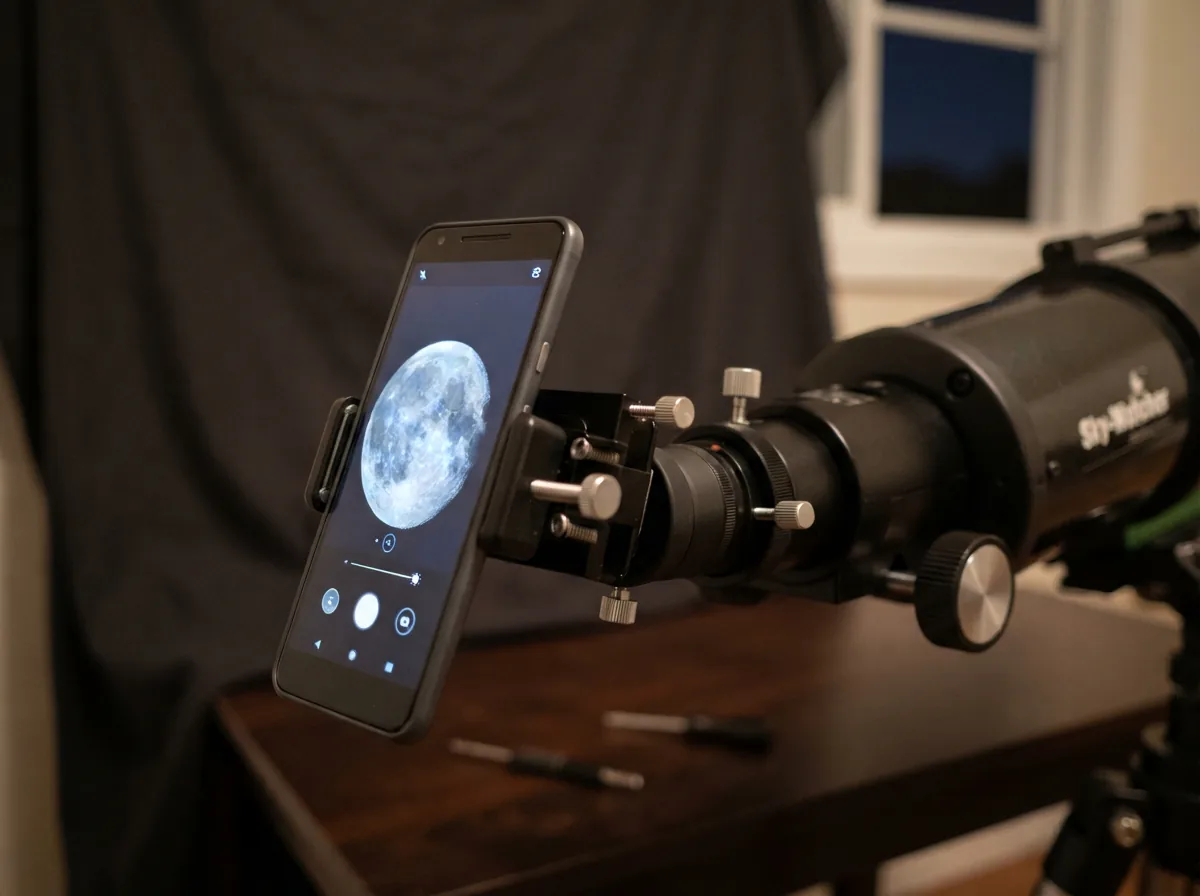
Orion SteadyPix Quick Smartphone Telescope Photo Adapter for Easy Celestial Imaging

Effortlessly capture the moon, planets, or bright star clusters with your smartphone. This adapter provides a secure, vibration-free connection to your telescope’s eyepiece, turning your phone into a powerful astrophotography tool for instant sharing.

Orion T-Thread Spacer Ring Kit for Precise Camera Back Focus Adjustment

This kit provides the precise spacing needed for perfect back focus in your imaging train. The various T-thread spacer rings allow you to fine-tune the distance between your camera sensor and other optical components for critically sharp results.

Orion Thin Off-Axis Guider (TOAG) for Compact and Versatile Guiding

This thin off-axis guider provides a robust guiding solution without adding bulk to your imaging system. By diverting a small portion of light for guiding, it eliminates the need for a separate guide scope, reducing weight and potential flexure.
How You’ll Use Them

Matching Accessories to Your Observing Goals

Precision Imaging

Use focusers and adapters to ensure your optical system is perfectly aligned. Guide scopes and auto-guiders are essential for achieving the pinpoint tracking needed for long exposures.

Casual Stargazing

Smartphone adapters and wide-angle binoculars provide accessible ways to share the night sky. They offer instant, enjoyable viewing and capture without complex setups.

Deep-Sky Astrophotography

Field flatteners and specific camera adapters are engineered to optimize results when capturing light from distant galaxies and nebulae over many hours.

Planetary Observation

High-quality binoculars and planetary focusers enhance the clarity and detail you can observe on craters, mountain ranges, and cloud bands of solar system objects.

System Building

Modular accessories like spacer rings and T-threads allow you to build and refine your equipment stack as your skills and interests in astronomy grow.

Dual Visual & Imaging

Many accessories, like centering adapters and dual-speed focusers, improve performance for both visual observers and imagers, making them versatile additions.

Selecting the Best Telescope Accessories

Choosing the right accessories involves matching compatibility, optical quality, and intended use with your telescope setup. Factors like focuser type, thread compatibility, and magnification needs directly impact performance and imaging results.

Focuser Compatibility

Ensuring your focuser matches the accessory's thread and size guarantees secure attachment and precise alignment. A mismatch can lead to vignetting or inability to attach critical imaging components.

Optical Precision

High-quality optical glass and precise machining in adapters and flatteners preserve image sharpness and reduce aberrations. Inferior optics can introduce distortion across the entire field of view.

Use Case Fit

Consider whether the accessory is for visual observing, astrophotography, or both. Guide scopes and flatteners serve specific imaging roles, while binoculars offer standalone wide-field viewing.

Binoculars vs. Adapters

Binoculars offer greater portability and a natural two-eyed view, while telescope-mounted adapters provide higher magnification and specialized imaging capabilities for deep-sky targets.

Focusing Mechanism Type

Dual-speed focusers and helical focusers offer different control mechanisms. Dual-speed provides coarse and fine adjustment, while helical offers smooth, precise movement ideal for guiding.

Camera Integration Kits

T-ring and spacer kits expand compatibility for different camera models and sensor positions. The right kit ensures your camera achieves correct back focus for sharp images.

Types

Accessory Categories and Their Roles

Orion accessories span several categories, from optical correctors that refine your image to electronic tools that automate your tracking. Understand the key subtypes to match an accessory to your specific observational or imaging goal.

Mechanical Connectors

These include adaptors, spacer rings, and T-rings. They physically connect different equipment, like cameras or eyepieces, ensuring a secure, light-tight, and properly spaced union.

Optical Enhancers

This group features field flatteners, corrector lenses, and precise adapters. They modify or enhance the optical path to correct for aberrations or ensure perfect alignment.

Focusing & Guiding

This category covers focusers, guide scopes, and auto-guiders. These tools are dedicated to achieving razor-sharp focus and enabling precise, automated tracking for long exposures.

Visual & Imaging Aids

This includes astronomy binoculars and smartphone adapters. These accessories are designed for direct, handheld observation or for easily capturing images with mobile devices.
Astronomer Experiences

What Observers Say About Our Accessories

Hear from fellow amateur astronomers about their experiences using Orion accessories. Discover how these tools have enhanced their observing sessions and astrophotography results through practical applications.
Adding the field flattener to my refractor made a night-and-day difference. My stars are now sharp from corner to corner in my images. A must-have for any imaging setup.
Decorative customer review avatar icon 1
StarGazer88
The centering adapter solved my vignetting problem instantly. It feels incredibly well-made and my 1.25-inch and 2-inch eyepieces now sit perfectly centered in the focuser.
Decorative customer review avatar icon 2
CosmicClara
Switching to an off-axis guider simplified my rig and eliminated the flexure I had with my guide scope. My autoguiding is now rock solid for long exposures of galaxies.
Decorative customer review avatar icon 3
DeepSkyDave
The smartphone adapter let me capture my first decent photo of the moon in minutes. It's simple to use, holds my phone securely, and the results were surprisingly good.
Decorative customer review avatar icon 4
NebulaNewbie
The dual-speed focuser upgrade was worth every penny. The fine-tune knob is a revelation for planetary observing, allowing me to dial in perfect focus on Jupiter's cloud bands.
Decorative customer review avatar icon 5
PlanetaryPaul
The giant-view binoculars are my go-to for casual sweeping of the Milky Way. They gather so much light and the wide-field view is incredibly immersive and easy on the eyes.
Decorative customer review avatar icon 6
MilkyWayMara

Accessory Compatibility & Use Questions

Discover answers to common questions about upgrading your setup with compatible focusers, guides, imaging adapters, and optical enhancers. Learn how to match accessories to your specific telescope and goals.
You’ll need a T-ring specific to your camera brand (like Canon EOS) and a T-adapter that matches your telescope’s focuser thread, typically 1.25-inch or 2-inch. This combination creates a secure, light-tight connection for astrophotography.
An off-axis guider uses a small prism to pick off starlight from the main imaging field for guiding. This avoids adding extra weight and complexity of a separate guide scope, making your imaging rig more compact and reducing potential flexure issues.
Field flatteners are designed for specific focal length ranges. Using one made for short refractors ensures it corrects the field curvature appropriate for your telescope’s optics, resulting in sharp stars from the center to the edge of your camera sensor.
A dual-speed focuser allows for rapid, coarse focusing followed by precise, fine-tuning adjustments. This is especially valuable for astrophotography where achieving perfect focus on faint stars is critical, and for high-power planetary viewing.
The binoculars’ 25×100 specification means they provide 25 times magnification with large 100mm objective lenses. This combination gathers significant light for faint nebulae and galaxies, while the wide field of view is excellent for scanning the Milky Way.
Yes, but you must ensure the adapter’s center is perfectly aligned with the optical axis. A precision centering adapter is designed for this purpose, minimizing any tilt or misalignment that could cause uneven focus or image degradation.
A telescope focuser with an adapter being attached to its eyepiece holder.
A smartphone mounted on a telescope, capturing an image of the moon through the eyepiece.
Explore Further

Related Articles and Guides

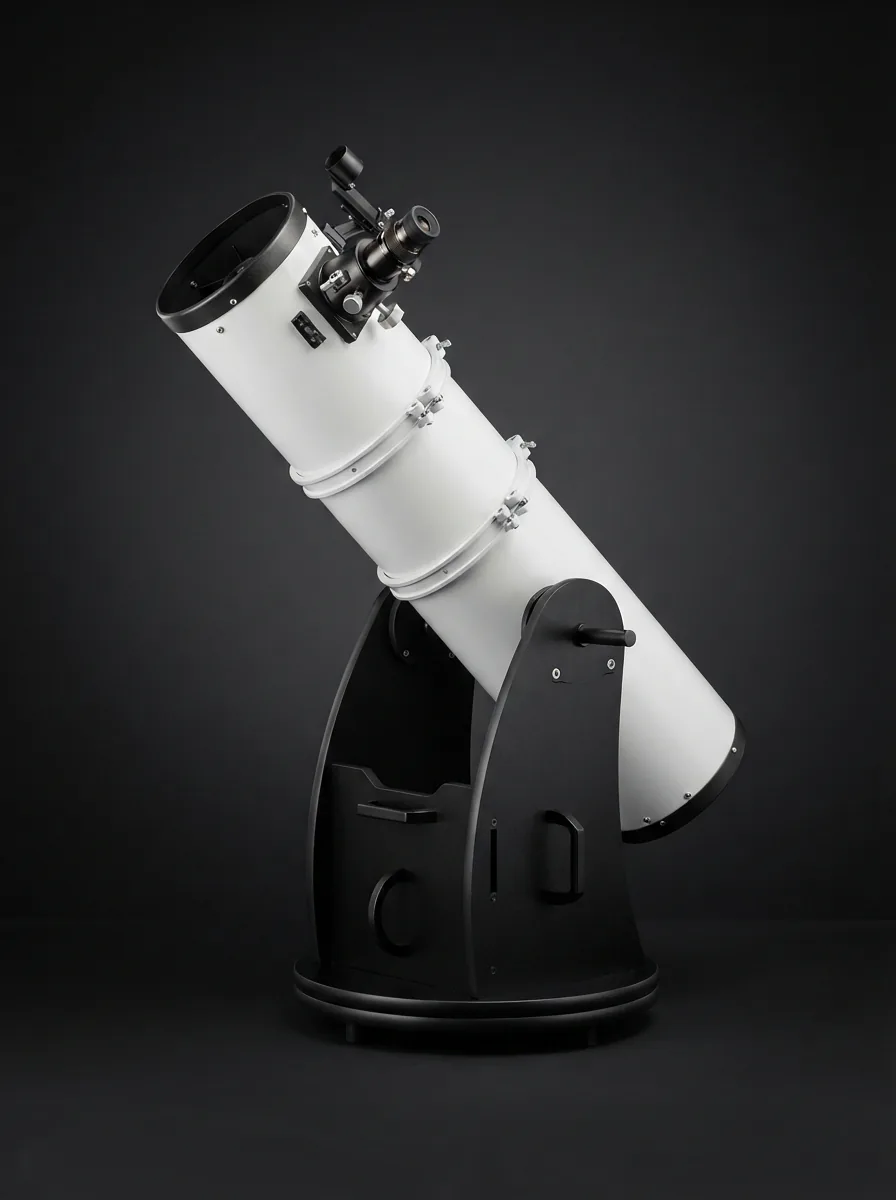
The Orion SkyQuest XT8 Classic Dobsonian Telescope shown in a full studio shot against a dark background.
SkyQuest Dobsonian Telescopes

Orion SkyQuest XT8 Dobsonian Telescope

The Orion SkyQuest XT8 Classic Dobsonian Telescope combines a powerful 8-inch aperture with point-and-view simplicity, making it the ideal instrument for beginners to discover the solar system and deep-sky wonders in bright, vibrant detail.
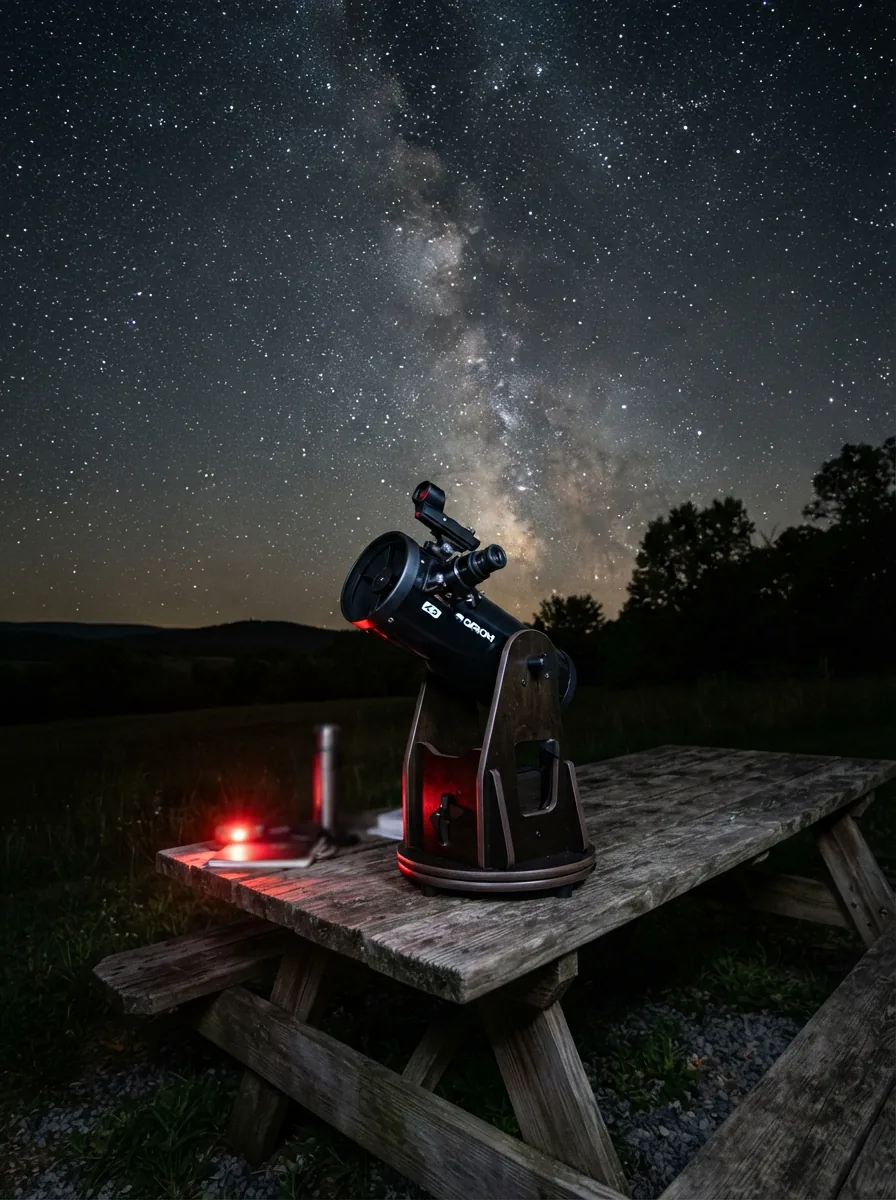
An Orion StarBlast telescope set up on a table under a starry night sky
StarBlast Telescopes

Orion StarBlast Telescope

Explore the Orion StarBlast telescope collection, a range of beginner-friendly reflectors designed for stunning lunar and planetary views. Compare tabletop simplicity with equatorial precision and complete starter kits to find your perfect entry into astronomy.

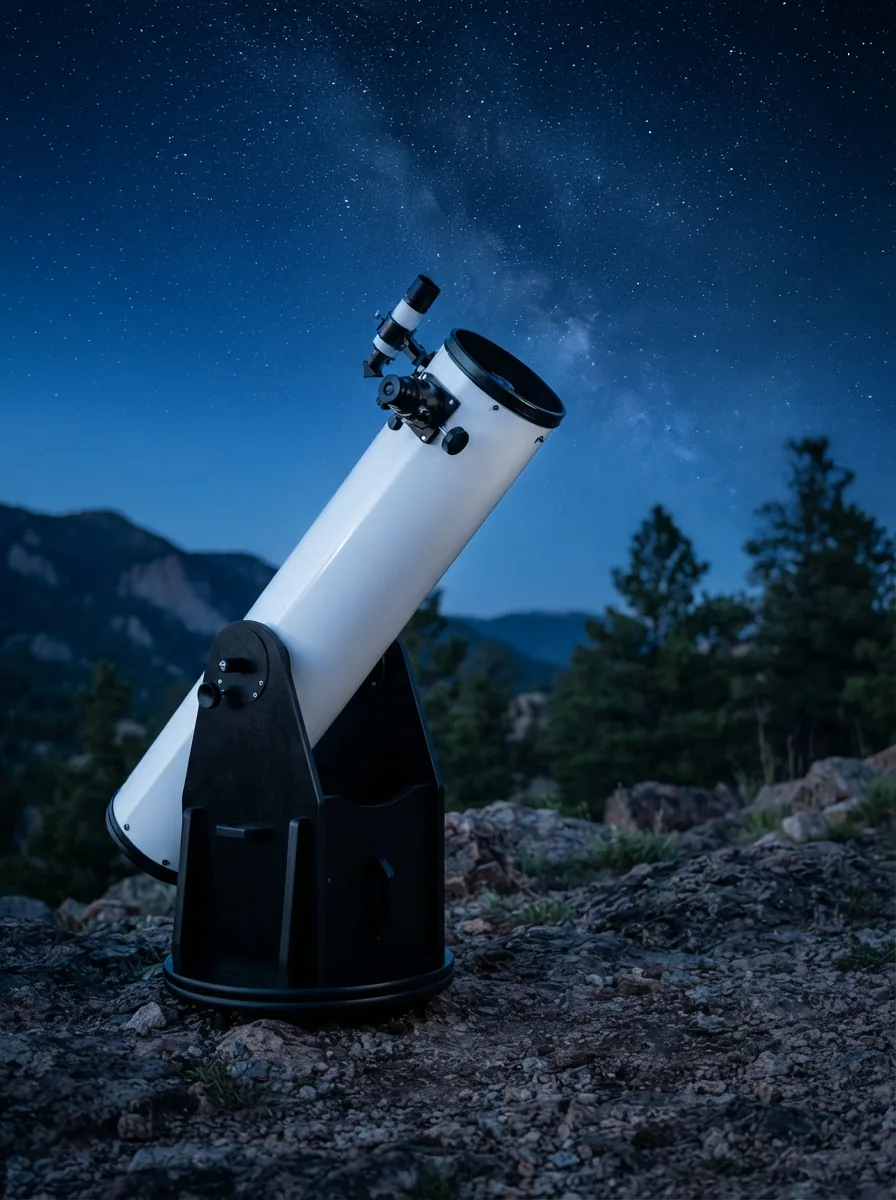
The Orion SkyQuest XT6 Classic Dobsonian Telescope fully assembled and positioned against a twilight sky.
SkyQuest Dobsonian Telescopes

Orion SkyQuest XT6 Dobsonian Telescope

Reveal the wonders of the cosmos with the Orion SkyQuest XT6, a 6-inch Dobsonian telescope offering bright, detailed views of planets, moons, and deep-sky objects. Its intuitive point-and-view design makes it the ideal, powerful starter telescope.

The Orion SpaceProbe 130ST telescope as the central subject against a dramatic night sky backdrop.
SpaceProbe & 130ST Telescopes

Orion 130ST Telescope

The Orion SpaceProbe 130ST EQ is a quality reflector telescope for more serious beginning stargazers. Its fast parabolic mirror gathers ample light, revealing details in deep-sky objects like galaxies and nebulae that smaller telescopes miss.

The Orion StarBlast 4.5 EQ Reflector Telescope prominently displayed as the main product image.
StarBlast Telescopes

Orion StarBlast 4.5 EQ Telescope

This reflector telescope offers a sizable 4.5-inch aperture and fast optics on a responsive equatorial mount, delivering bright, detailed views ideal for advancing your stargazing journey.

Orion SkyQuest XT8 Classic Dobsonian Telescope displayed prominently against a starry background.
Telescope Types & Sizes

Orion 8 Inch Dobsonian Telescope

The Orion SkyQuest XT8 Classic Dobsonian is the ultimate entry into serious amateur astronomy. Its massive 8-inch mirror gathers breathtaking light, revealing details invisible to smaller scopes, all from a simple, stable platform.