
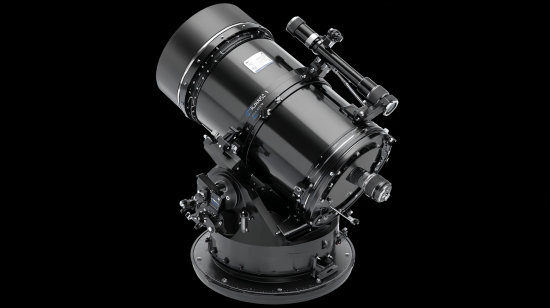
Welcome to the Galaxy — No Loading Screen Required
If the night sky were an open-world RPG, the Orion SkyQuest XT8 Classic Dobsonian Telescope Kit would be your legendary-tier starting weapon — the kind of gear that doesn’t just let you play the game, it changes the way you experience it entirely. This isn’t a beginner’s toy or a dusty shelf ornament. This is a serious, high-performance optical instrument wrapped in a surprisingly beginner-friendly design, built by one of the most trusted names in amateur astronomy: Orion.
Priced at approximately $699.99 USD (and around AED 2,709 in the UAE market), the XT8 occupies a sweet spot in the telescope meta — powerful enough to satisfy seasoned stargazers, yet accessible enough for newcomers who want to skip the tutorial and dive straight into the action. Whether you’re hunting down the dust lanes of the Andromeda Galaxy, resolving the globular cluster M13, or just flexing on the craters of the Moon, the XT8 delivers frame after frame of crisp, breathtaking visuals.
In this review, we’re going deep — specs, accessories, performance breakdowns, and a curated product list of the five most popular telescopes in the Dobsonian category. Think of it as your pre-raid gear check before you head into the cosmos.
Top 5 Most Popular Dobsonian & Reflector Telescopes Right Now
Before we deep-dive into everything the XT8 has to offer, here’s a quick-glance tier list of the five most popular telescopes competing in this space — including our hero product:

1. Orion SkyQuest XT8 Classic Dobsonian Telescope Kit
The flagship of this roundup and arguably the most beloved Dobsonian in its price class. With an 8-inch (203mm) parabolic primary mirror, 1200mm focal length, and a truckload of accessories, this is the definitive choice for visual deep-sky observers who want maximum aperture without breaking the bank.
⭐ Rating: 9.2 / 10
💰 Price Range: $650 – $750 USD

2. Sky-Watcher Classic 200 Dobsonian 8-Inch Telescope
A strong rival to the XT8, the Sky-Watcher Classic 200 brings a solid-tube, traditional Dobsonian design with clean optics and a no-fuss setup experience. Popular with beginners and intermediate users alike, it punches hard in the deep-sky viewing category and is frequently recommended as a direct alternative to the Orion XT8. Its simple construction and reliable optics make it a consistent crowd-pleaser.
⭐ Rating: 8.8 / 10
💰 Price Range: $500 – $650 USD

3. Celestron StarSense Explorer 150AZ App-Enabled Telescope
For stargazers who want a little digital magic in their sessions, the Celestron StarSense Explorer 150AZ introduces smartphone-powered navigation via the StarSense App. Compatible with both iPhone and Android, this 150mm tabletop Dobsonian is built for beginners who want guided sky tours and ease of use above all else. It trades raw aperture for convenience, making it a great “co-op mode” family telescope.
⭐ Rating: 8.5 / 10
💰 Price Range: $300 – $500 USD

4. Sky-Watcher Flextube 200 Dobsonian 8-Inch Collapsible Telescope
For the astronomer on the move, the Sky-Watcher Flextube 200 offers the same 8-inch aperture power as the XT8 in a collapsible truss-tube design that dramatically reduces transport length. If portability is your top stat, this telescope earns serious points. It sacrifices some structural rigidity compared to solid-tube alternatives but makes up for it with incredible flexibility and convenience.
⭐ Rating: 8.7 / 10
💰 Price Range: $600 – $800 USD

5. Celestron NexStar 8SE Computerized Telescope
The NexStar 8SE is the high-end pick for players who want their telescope to do the navigating for them. With a fully automated GoTo mount, an 8-inch Schmidt-Cassegrain optical tube, and a database of over 40,000 celestial objects, this is the telescope equivalent of unlocking God Mode. It costs significantly more and is heavier than the XT8, but if computerized tracking is your endgame, the 8SE is worth every coin.
⭐ Rating: 9.5 / 10
💰 Price Range: $1,200 – $1,500 USD
The Orion SkyQuest XT8: A Full Spec Breakdown
Now let’s pop the hood on the star of the show. The Orion SkyQuest XT8 Classic Dobsonian Telescope Kit is built around a core set of specifications that put it firmly in the top tier of visual astronomy for its price bracket.
Optical Power: The 8-Inch Advantage
The single most important number on any telescope’s stat sheet is its aperture — the diameter of the primary mirror or lens. Aperture determines how much light the telescope can collect, and more light means brighter, sharper, more detailed images of distant objects.
The XT8’s 203mm (8-inch) parabolic primary mirror is its crown jewel. To put that in perspective, an 8-inch mirror collects 78% more light than a 6-inch mirror. That’s not a marginal upgrade — it’s a game-changing jump in performance that lets you see details invisible to smaller instruments. You’ll be able to resolve the individual stars in dense globular clusters, spot dust lanes threading through galaxies, and observe the delicate structure of planetary nebulas with genuine clarity.
The focal length of 1200mm (with a focal ratio of f/5.9) gives the XT8 a versatile optical profile — wide enough for sweeping views of large nebulas, yet focused enough for detailed planetary and lunar work. The limiting stellar magnitude of 14.0 means you can pull in stars more than 14 magnitudes below naked-eye visibility, unlocking swaths of the deep sky that smaller instruments simply cannot reach.
The resolving power is rated at 0.56 arc-seconds, which is exceptional for a telescope at this price point. This means you can resolve fine details like the Cassini Division in Saturn’s rings, the cloud belts on Jupiter, and fine cratering on the lunar surface.
The Dobsonian Mount: Point, Shoot, Explore
One of the most beloved aspects of the XT8 is its Dobsonian alt-azimuth mount — a design philosophy that prioritizes simplicity and stability above all else. There are no counterweights, no polar alignment requirements, no gears to calibrate. You point the telescope at the sky and you observe. Period.
The wooden Dobsonian base provides a rock-solid platform that virtually eliminates vibration, even at high magnifications. This is a common pain point with cheaper telescopes on flimsy tripods — they shake with every nudge, turning high-power views into blurry slideshows. The XT8’s PTFE and UHMW polymer bearings ensure smooth, fluid motions in both altitude and azimuth axes, making it easy to track objects across the sky manually without jerking or overshooting.
The CorrecTension tube balance system is a smart design feature that uses spring tension to keep the optical tube balanced regardless of what eyepiece you’re using. This eliminates the frustrating “telescope drooping down when you let go” problem that plagues many Dobsonians — a quality-of-life upgrade that veteran observers will especially appreciate.
Focuser and Eyepiece Compatibility
The XT8 ships with a precision 2-inch Crayford focuser with a 1.25-inch adapter included. This is a significant spec because a Crayford focuser provides smooth, backlash-free focusing that makes achieving perfect focus fast and satisfying. The dual-size compatibility means you can run standard 1.25-inch eyepieces right out of the box, and upgrade to wider 2-inch eyepieces later for panoramic low-power views.
The included eyepiece is a 25mm Plössl, which provides 49x magnification — a solid general-purpose starting point that works great for wide-field scanning of star clusters and larger nebulas. Combine that with the included Orion Shorty 2x Barlow lens, and you instantly unlock 98x magnification without purchasing any additional eyepieces. The Barlow effectively doubles the power of any 1.25-inch eyepiece, making it one of the most cost-efficient accessories in the box.
The maximum useful magnification tops out at 300x, which is achievable on nights of excellent atmospheric seeing. Pushing beyond this point runs into the limits of physics and atmospheric turbulence rather than the telescope’s optical design.
Build Quality and Materials
The optical tube is constructed from steel and measures 45.5 inches in length when assembled. It’s a full-sized, solid-tube Dobsonian — not a collapsible truss design — which means maximum thermal stability and structural rigidity at the cost of being slightly less portable. The OTA weight of 19.6 lbs and a mount/tripod weight of 18.7 lbs bring the fully assembled weight to 39.1 lbs — manageable for transport but not something you’d carry on a hiking trail.
The primary mirror features aluminum and silicon dioxide coatings, which provide excellent reflectivity and durability. The mirror is center-marked at the factory, making collimation (the process of aligning the optical elements) straightforward even for beginners. The mirror is mounted in a cast-aluminum support cell engineered for maximum ventilation, which helps the mirror temperature equalize quickly when moving from indoors to cold outdoor air — a process called “cool-down” that directly affects image sharpness.
The secondary mirror measures 46mm in diameter, representing a 22% obstruction by diameter and just 5% by area — a very respectable figure that means minimal impact on contrast and resolution.
The Kit: What’s in the Box?
One of the strongest arguments for the XT8 over its competitors is the sheer breadth of the included accessory kit. This isn’t a stripped-down package that forces you to immediately spend hundreds more — it’s a genuinely useful collection of tools that get you observing effectively from day one.
Here’s what you get:
The 25mm Plössl eyepiece handles your general-purpose viewing needs with crisp, clear optics. The Orion Shorty 2x Barlow lens is a high-quality amplifier that works with virtually any 1.25-inch eyepiece, effectively doubling your eyepiece collection without spending a dime extra. The Red Dot Finder Scope makes it easy to aim the telescope at your target by projecting a non-magnified red dot onto the sky view.
The MoonMap 260 is a laminated, detailed chart of the lunar surface, indispensable for identifying craters, mountains, and mare regions during your first lunar sessions. The DeepMap 600 is an equally indispensable two-sided star chart featuring 600 deep-sky objects with coordinates and visual indicators — consider it your in-game quest map for exploring the universe. The Telescope Observer’s Guide rounds out the paper materials with a practical introduction to observing techniques, star-hopping strategies, and celestial object descriptions.
For late-night sessions, the RedBeam Mini LED flashlight keeps your charts readable without destroying your night vision — a thoughtful inclusion that shows Orion understands what actually happens at the eyepiece. Rounding it all out is a smartphone photo adapter, letting you attach your phone to the eyepiece for afocal imaging — great for capturing quick Moon shots to share with friends.
The package also includes Starry Night SE software on CD-ROM, a comprehensive planetarium program that helps you plan your observing sessions, explore the solar system interactively, and chart the night sky from any location on Earth.
Performance in the Field: Real-World Deep-Sky Capabilities
Numbers on a spec sheet only tell half the story. How does the XT8 actually perform when you take it outside and point it at the universe?
For lunar observation, the XT8 is outstanding. At moderate magnifications around 100x–150x, the Moon’s surface comes alive with terrifying detail — sharp crater walls, ancient impact scars, mountain ranges, and the subtle texture of lava plains called mare. On nights of steady seeing, you can push to 200x–250x for extreme close-ups of crater interiors that look almost three-dimensional.
For planetary observation, the XT8 handles the solar system’s showpieces with confidence. Saturn’s rings — including the Cassini Division — are visible and sharp. Jupiter’s cloud bands and the Galilean moons are beautiful, and with good seeing, you can spot the Great Red Spot. Mars reveals polar ice caps and surface markings during opposition. Venus shows clear phases.
But where the XT8 truly earns its S-tier classification is in deep-sky observation. This is the telescope’s main quest, and it completes it with flying colors. The Andromeda Galaxy (M31) spans an enormous angular width, and in dark skies, the XT8 reveals hints of its spiral arms and companion galaxies. Globular clusters like M13 in Hercules are fully resolved into individual stars rather than appearing as fuzzy blobs. Emission nebulas like the Orion Nebula (M42) and the Ring Nebula (M57) show intricate structural detail. Open clusters sparkle brilliantly across wide fields.
The honest limitation is light pollution. Like all Dobsonians, the XT8 benefits enormously from dark skies. Under suburban skies, you’ll still see plenty — but to truly unlock the telescope’s full potential, a dark sky site is the endgame destination.
Who Is the XT8 For?
The XT8’s user level is listed as beginner to intermediate, but that categorization is almost underselling it. The telescope is perfectly suited to beginners because of its intuitive point-and-view design, but the optical performance grows with the observer — you won’t outgrow this telescope for many years, if ever.
It’s the ideal choice for:
- Beginners who want real performance from day one, not a toy that disappoints in the first week
- Intermediate observers looking for an aperture upgrade from a smaller telescope
- Visual observers who prioritize deep-sky viewing over astrophotography
- Families who want a shared stargazing experience that isn’t frustrating to operate
- Budget-conscious buyers who want maximum bang-per-buck and refuse to compromise on optics
The telescope is categorized as best for lunar and planetary viewing by some vendors, but its true strength — validated by years of user reviews and community consensus — lies in deep-sky performance. Planets are great, but nebulas and galaxies are where the XT8 makes grown adults gasp.
Value Proposition: Is the $699 Price Tag Worth It?
At $699.99, the Orion SkyQuest XT8 Classic Dobsonian Telescope Kit is priced as a premium entry-level instrument — but one that genuinely delivers premium results. When you factor in the included accessories (Barlow lens, star charts, observer’s guide, flashlight, smartphone adapter, and software) against what each item costs separately, the kit represents exceptional value. Purchasing each component individually would easily push the total well past $900.
The 1-year manufacturer’s warranty from Orion provides peace of mind, and the telescope’s reputation for durability means many XT8 owners have been using their units for five, ten, even fifteen years. This isn’t a disposable piece of gear — it’s a long-term investment in your astronomical journey.
The only significant caveat is that the XT8 is currently showing limited availability at some retailers, so prospective buyers are encouraged to check stock and set up availability alerts where necessary.
Final Verdict
The Orion SkyQuest XT8 Classic Dobsonian Telescope Kit isn’t just a telescope — it’s a passport to the universe, handed to you with a complete toolkit and zero complicated setup rituals. It earns its place as an S-tier recommendation in the Dobsonian category through a combination of raw optical performance, exceptional value, beginner-friendly design, and a proven track record that spans decades of amateur astronomy history.
If you’re ready to stop looking up and start seeing — to cross the threshold from “astronomy curious” to “astronomy obsessed” — the XT8 is the telescope that unlocks that journey. Every photon matters, and this telescope captures more of them than almost anything else in its price class.
Clear skies. Maximum aperture. The cosmos awaits.