
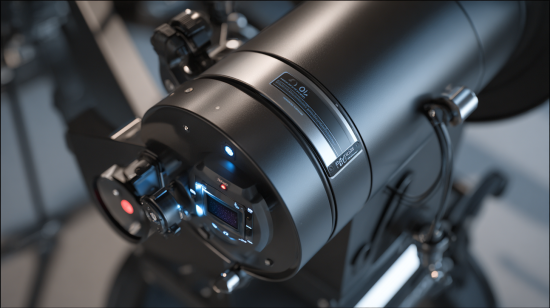
There is something profoundly moving about the night sky — that vast, star-scattered canopy stretched silently above us, concealing galaxies, nebulae, and planetary systems far beyond what the naked eye can perceive. For those who have ever paused beneath it and felt the pull of curiosity, the right telescope does not merely magnify distant light. It opens an entirely new dimension of experience. The Orion SkyQuest XT8g GoTo Dobsonian is precisely that kind of instrument: a telescope that bridges the gap between raw optical power and intuitive, technology-driven ease of use. Built around a 203mm (8-inch) aperture primary mirror, equipped with a fully motorized GoTo computerized system, and backed by a database of more than 42,000 celestial objects, this telescope allows you to explore the universe without the frustrating manual learning curve that so often discourages new astronomers. Whether you are standing under your first truly dark sky or you are a seasoned observer seeking a capable and convenient instrument, the Orion SkyQuest XT8g GoTo Dobsonian is a telescope that genuinely delivers on its promise — from the very first night.
Most Popular Products
Before diving into the full details of the Orion SkyQuest XT8g GoTo Dobsonian, here is a look at five of the most popular products our astronomy community consistently turns to. Each one represents excellent value, outstanding quality, and strong compatibility with the XT8g system.
1. Orion SkyQuest XT8g GoTo Dobsonian Telescope

The centerpiece of this article and one of the most acclaimed GoTo Dobsonian telescopes in the amateur astronomy market. With a 203mm aperture, motorized azimuthal mount, optical encoders, and over 42,000 objects in its database, it strikes a remarkable balance between performance and usability that few instruments in its class can match.
⭐⭐⭐⭐⭐ (4.8 / 5) | Price Range: €1,100 – €1,200
2. Orion 28mm DeepView 2″ Widefield Eyepiece

A premium widefield overview eyepiece that delivers sweeping, immersive views of large star clusters, nebulae, and rich Milky Way fields. It is included in the XT8g standard delivery and is also available separately as an upgrade for other telescopes in your collection. Its expansive field of view makes it the ideal first eyepiece to drop in after a GoTo slew.
⭐⭐⭐⭐⭐ (4.7 / 5) | Price Range: €60 – €90
3. Orion Shorty Plus 1.25″ 2x Barlow Lens

A compact, high-quality Barlow lens that doubles the magnification of any 1.25″ eyepiece with minimal impact on image sharpness or contrast. Paired with the XT8g’s included 12.5mm Plössl, it effectively gives you a 25x extension of your eyepiece range without the cost of a dedicated high-power eyepiece.
⭐⭐⭐⭐½ (4.5 / 5) | Price Range: €30 – €50
4. Orion PowerTank Lithium 60 Portable Power Supply

A compact, rechargeable 12V lithium power pack purpose-built for GoTo telescopes and motorized mounts. Since the XT8g requires a 12V / 2A supply, this PowerTank is the natural companion piece — delivering multiple full nights of observing from a single charge, entirely untethered from mains power.
⭐⭐⭐⭐⭐ (4.9 / 5) | Price Range: €80 – €130
5. Orion 12.5mm Illuminated Reticle Eyepiece 1.25″

The precision alignment tool included with the XT8g, designed specifically for accurate 2-star GoTo calibration. The illuminated crosshair reticle allows you to center alignment stars with exceptional accuracy, ensuring that the GoTo system places objects reliably within the field of view on every slew.
⭐⭐⭐⭐½ (4.6 / 5) | Price Range: €40 – €70
The Philosophy Behind the Orion SkyQuest XT8g GoTo
To truly appreciate what the Orion SkyQuest XT8g GoTo Dobsonian represents, it helps to understand the history of the Dobsonian telescope and what makes the GoTo variant so significant. The traditional Dobsonian design — conceived by the amateur astronomer John Dobson in the mid-20th century — was built on a single, brilliant insight: that the most important performance variable in a telescope is aperture, and that aperture could be made affordable and portable if the mechanical mount were simplified to the point of elegance. The Dobsonian rocker box, a low-friction altitude-azimuth mount made from simple materials, allowed amateurs to build and own telescopes with mirrors far larger than those found in any comparable commercial instrument at the time.
The legacy of that philosophy is alive and well in the Orion SkyQuest XT8g GoTo, but Orion has added something transformative to the formula. By integrating a fully motorized GoTo platform with optical encoder feedback, the XT8g gives you everything the classic Dobsonian offers — large aperture, ease of transport, structural simplicity, and cost-effectiveness — while eliminating the one significant disadvantage of the traditional design: the need to manually star-hop to find and track objects in the sky. The result is a telescope that feels both familiar to experienced Dobsonian users and immediately approachable to complete beginners.
Comparable GoTo instruments in the Schmidt-Cassegrain category offer similar electronic functionality, but at nearly double the cost and with noticeably smaller apertures for the same price bracket. The XT8g occupies a position of genuine competitive advantage — providing more aperture, more included accessories, and a more intuitive observing experience per euro spent than virtually anything else on the market at this price point.
Optical Performance: What a 203mm Mirror Reveals
The heart of any telescope is its primary optic, and the Orion SkyQuest XT8g GoTo does not disappoint. The 203mm primary mirror with a focal length of 1200mm and an aperture ratio of f/5.9 defines this telescope’s exceptional optical capabilities.
An 8-inch aperture is widely regarded within the astronomy community as the threshold at which serious observational work truly begins. Below this aperture, fainter deep-sky objects remain stubbornly faint and structurally featureless. At 203mm, the world of amateur astronomy opens up in a way that smaller instruments simply cannot match. With this telescope you can observe fine planetary detail on Jupiter, Saturn, Mars, and Uranus with the kind of clarity that rewards patient, unhurried observation. Jupiter’s equatorial cloud bands, the Northern and Southern Equatorial Belts, and the Great Red Spot are clearly visible in steady seeing conditions. Saturn’s rings show not only the main divisions but the Cassini Division separating the A and B rings, along with several of Saturn’s brightest moons. Mars near opposition reveals polar ice caps and dark albedo features.
Moving beyond the solar system, the 203mm aperture resolves individual stars in globular clusters such as M13, M5, and M15, turning what appears in smaller telescopes as a hazy, unresolved glow into a stunning, three-dimensional sphere of stellar fire. Spiral structure becomes detectable in nearby galaxies including M31, M33, and M81. Planetary nebulae such as the Ring Nebula (M57) and the Dumbbell Nebula (M27) reveal their characteristic shapes with striking clarity.
The primary mirror is crafted from homogeneous optical glass with a particularly low thermal expansion coefficient, which allows the mirror to acclimatize to outdoor temperature within just a few minutes rather than the extended cool-down period required by inferior glass materials. This means you can begin serious observing almost immediately after setup — a genuinely practical advantage for observers who want to make the most of every clear night.
The mirror surface carries a high-reflectivity coating at 94%, maximizing the amount of incoming light delivered to the eyepiece. A 47mm secondary mirror (representing 23% central obstruction) is deliberately sized to balance light-gathering efficiency against contrast preservation. The result is a bright, contrast-rich image that serves both wide-field deep-sky viewing and high-magnification planetary observation equally well.
The primary mirror features a central marking that simplifies the collimation process, ensuring that the optical axis can be re-established quickly and accurately whenever needed. The mirror support cell is precision-engineered to hold the primary mirror firmly in correct alignment through temperature changes and transport, minimizing the frequency with which full recollimation is necessary.
With a resolving power of 0.58 arc-seconds and a maximum practical magnification of 300x, the Orion SkyQuest XT8g GoTo reaches a limiting visual magnitude of 14.2 — meaning objects that are completely invisible in the night sky to the naked eye, or even through smaller amateur instruments, become accessible targets. There is no shortage of targets in the sky at this limiting magnitude: it encompasses hundreds of galaxies, thousands of double stars, and a rich variety of nebulae and clusters that could occupy a lifetime of observing.
The GoTo System: Intelligent Navigation Across 42,000 Objects
The GoTo system integrated into the Orion SkyQuest XT8g is not a simplified or compromised version of computerized pointing. It is a fully functional, encoder-assisted GoTo platform that provides every capability you would expect from a dedicated GoTo mount, packaged within the practical and affordable Dobsonian format.
The setup procedure begins with a 2-star alignment — one of the most straightforward calibration methods in modern GoTo astronomy. After physical assembly of the telescope, you select two bright, widely separated stars from the hand controller’s menu, center each one using the included illuminated crosshair eyepiece, and confirm. The system computes the precise orientation of the telescope relative to the sky and is immediately ready to navigate to any of its stored objects. The entire process typically takes fewer than five minutes, even for first-time users.
With calibration complete, selecting a target is entirely intuitive. Navigate the hand controller’s database, choose any of the 42,000+ stored celestial objects — planets, stars, Messier objects, NGC and IC catalogue entries, star clusters, nebulae, galaxies, or double stars — press the confirmation button, and the motors engage. The telescope slews smoothly and decisively to the selected target, positioning it within the generous field of view provided by the 2″ 28mm DeepView widefield eyepiece. From that moment, automatic sidereal tracking maintains the object’s position in the eyepiece indefinitely, compensating continuously for Earth’s rotation.
This tracking capability is far more significant in practice than it might appear on paper. When an object is tracked automatically, you can observe it at the highest available magnification — where the field of view is smallest and the slightest drift would quickly carry the object out of frame — without any need to manually adjust the telescope. This allows you to concentrate fully on the visual experience of observing rather than the mechanical task of following the sky. It also enables the use of high-power eyepieces with particularly narrow fields of view and exceptional axial sharpness, which would otherwise be impractical without tracking.
One of the most technically sophisticated features of the XT8g is its integration of optical rotary encoders on both the altitude and azimuth axes. These encoders continuously monitor the physical orientation of the telescope, even when the tube is moved manually by the observer. Unlike many GoTo systems that lose their calibration the moment the telescope is pushed by hand, the XT8g’s computer updates its positional model in real time and continues tracking accurately. This means the telescope simultaneously offers you the complete freedom of a manual Dobsonian and the full functionality of a GoTo mount — a combination that is both practically useful and technically impressive.
The hand controller also provides tracking rate selection across three modes: sidereal, solar, and lunar, allowing you to track the Moon and Sun at their correct apparent rates rather than the slightly different sidereal rate used for stars and deep-sky objects. The inclusion of RS232 and AUX outputs on the system enables connection to a computer running compatible astronomy software, opening possibilities for remote control and expanded object databases for more advanced users. Observers interested in comets and newly discovered objects will appreciate the system’s support for direct coordinate entry, allowing any object with known Right Ascension and Declination to be located and tracked immediately.
A Complete Package: Everything Included from Day One
One of the most genuinely impressive aspects of the Orion SkyQuest XT8g GoTo is how completely it is equipped directly from the box. Many telescopes at this price point require significant additional spending on accessories before they become fully usable. The XT8g is a different proposition entirely.
The 2″ 28mm DeepView Widefield Eyepiece is a quality overview piece that delivers a wide, immersive field of view ideal for locating targets, sweeping rich star fields, and enjoying the full spatial context of large deep-sky objects. At the XT8g’s 1200mm focal length, this eyepiece produces approximately 43x magnification with a genuinely expansive apparent field.
The 12.5mm 1.25″ Plössl Illuminated Crosshair Eyepiece serves the critical dual function of providing precise centering accuracy during the 2-star alignment procedure and acting as a capable medium-power eyepiece for planetary and lunar observation at approximately 96x. The illuminated reticle is adjustable in brightness to preserve night vision during alignment.
The 2″ Crayford focuser with 1:10 microfocuser reduction is a premium mechanical component that deserves particular recognition. The 1:10 reduction means that one full rotation of the fine-focus knob moves the drawtube only one-tenth of what the coarse knob would produce. At high magnifications — where critical focus is the difference between a sharp, revealing planetary image and a blurred disappointment — this level of focuser precision is not a luxury but a necessity. The focuser also accepts a reduction sleeve for 1.25″ eyepieces and photo adapters, ensuring full compatibility with the entire range of standard astronomical accessories.
The EZ Light Spot Finder provides a quick, intuitive pointing aid for the initial phases of alignment and for bright-object navigation. It is a well-chosen accessory for an instrument of this type, occupying minimal space while adding genuine utility.
Completing the delivery is a comprehensive illustrated instruction manual, the GoTo hand controller, a 12V cigarette lighter power cable, an eyepiece holder, and collimation adjustment tools. Everything required to begin observing on the first night is in the box.
Astrophotography: Moon, Planets, and Beyond
While the Orion SkyQuest XT8g GoTo is fundamentally a visual observing instrument, its automatic tracking capability opens up real and rewarding astrophotography possibilities. Lunar and planetary imaging are well within the telescope’s design parameters. With the GoTo system maintaining the target’s position in the field, a DSLR camera, mirrorless camera, or dedicated planetary camera can be attached through the 1.25″ focuser reduction, and high-speed video capture of the Moon, Jupiter, Saturn, and Mars produces results of genuine quality. The 1:10 Crayford focuser is particularly valuable here: achieving critical focus for planetary imaging requires micro-adjustment precision that this focuser provides as standard.
For bright deep-sky objects, short-exposure imaging of prominent emission nebulae, open star clusters, and large galaxies is achievable with careful technique. The azimuthal GoTo mount introduces field rotation over longer exposures, which means that very extended deep-sky exposures are not the system’s primary strength. However, for observers developing their astrophotography skills and exploring imaging for the first time, the XT8g is an excellent and cost-effective platform.
Inspected, Tested, and Pre-Adjusted at Teleskop-Spezialisten
Every Orion SkyQuest XT8g GoTo sold through Teleskop-Spezialisten is individually inspected, functionally tested, and pre-collimated by our team before dispatch. Our specialists verify that the primary and secondary mirror alignment is within specification, that the GoTo motors operate correctly across their full range, that the focuser moves smoothly without slippage, and that the overall system is ready to deliver its best performance from the very first observing session.
This pre-delivery preparation service is not an optional extra at Teleskop-Spezialisten — it is a standard part of every telescope purchase. With more than 30 years of dedicated experience in the astronomy specialist trade, our team understands that a telescope which is optically misaligned or mechanically imperfect out of the box represents a frustrating experience for the customer — and we eliminate that risk as a matter of course. Every product we sell is one we use ourselves and one we are willing to recommend with genuine confidence.
Who Is the Orion SkyQuest XT8g GoTo Built For?
The Orion SkyQuest XT8g GoTo Dobsonian occupies a position of unusually broad appeal in the telescope market, serving a wide range of users effectively.
For beginners with serious astronomical aspirations, the XT8g removes the most significant barriers to a rewarding observing experience. The GoTo system eliminates the steep learning curve of manual star-hopping, so that from the very first clear night, spectacular objects are immediately within reach. The 203mm aperture ensures that what appears in the eyepiece is genuinely impressive — not a pale blur, but planets with visible detail, galaxies with discernible structure, and clusters resolved into individual points of stellar light.
For intermediate observers who have outgrown smaller instruments, the XT8g represents a substantial and meaningful aperture upgrade, combined with the GoTo convenience that transforms the quality of each observing session. The fully encoder-assisted system also means you retain the freedom of manual operation whenever you prefer it.
For experienced observers who value portability and rapid deployment, the GoTo Dobsonian format is hard to beat. Setup is faster than an equatorial mount of comparable capability, transport is easier, and the optical performance per unit of cost is genuinely superior to most alternatives.
Final Thoughts
The Orion SkyQuest XT8g GoTo Dobsonian is the telescope that the amateur astronomy community has long deserved: generous aperture married to intelligent automation, excellent build quality paired with a comprehensive accessory package, and professional-grade optical performance accessible at an honest price. At €1,149.00 including VAT, it offers more capability, more convenience, and more long-term observing potential than comparable GoTo instruments in the Schmidt-Cassegrain category, which regularly command nearly double this price for equivalent or lesser performance.
Add to this the individual inspection and pre-adjustment service provided by Teleskop-Spezialisten before every delivery, and you are not simply purchasing a telescope. You are entering into a partnership with an astronomy specialist who has been testing, adjusting, and recommending telescopes for over 30 years — one who will still be there to support you long after your first observation.
The night sky above you is filled with wonders that have waited billions of years to be seen. With the Orion SkyQuest XT8g GoTo Dobsonian, your invitation to begin discovering them starts tonight.